
You are using an out of date browser. It may not display this or other websites correctly.
You should upgrade or use an alternative browser.
You should upgrade or use an alternative browser.
Unknown Canoe Help - possible circular deck plate/logo
- Thread starter Murat V
- Start date

Treewater
Wooden Canoes are in the Blood
That's one way. I'm sure it works. I'm not offended by the copper splicing. I'm an admirer of Japanese broken pottery repair, kintsugi. I'm not using gold but I like the idea. It's a form of bragging in a way. The repair is obvious and gives extra value. To each his own.I used gflex for mending splits.
For ribs, I cut away damaged bits,
View attachment 60942
bent a new half rib to fit,
View attachment 60943
then fixed it alongside the remains of the old rib
View attachment 60941

samb
Wooden Canoe Maniac
If I remember correctly from the Walter Walker videos, (well worth watching for all wood canoe enthusiasts) there is a cotton strip between the stems and keelson and the planks on a longitudinal strip canoe. I imagine this is to help seal as the cotton will expand quite quickly when wet. I also seem to remember that wood to wood joints were varnished on assembly to help sealing.
This B&B canoe doesn't have cotton sealing though.


I do like the copper repairs with the patina! My rib canoe had a couple of very ugly galvanised patches which had no aesthetic merit whatsoever.
Sam
This B&B canoe doesn't have cotton sealing though.
I do like the copper repairs with the patina! My rib canoe had a couple of very ugly galvanised patches which had no aesthetic merit whatsoever.
Sam

MGC
Scrapmaker
Personally, I would lean away from using anything as a splice that has a bending moment that is so significantly different than wood. A future "event" at the site of those more rigid pieces would concentrate the stress of an impact at the ends of those pieces and potentially cause additional breaks. With some background in tribology, I may be overthinking this, but if I were making a repair, I would probably lean towards a repair akin to what Samb has described.
I am in favor of using older canoes. Except for one, all of mine are used for camping trips. The idea that perfection is not going to last for the long haul is logical. I've dropped my Morris on a carry. I get it. That said, I would think that a wide board would not be ideal for heavy use, even extensively restored. Basswood is extremely soft and presumably easily damaged. I'm thinking this might be one that is best suited for fishing.
I am in favor of using older canoes. Except for one, all of mine are used for camping trips. The idea that perfection is not going to last for the long haul is logical. I've dropped my Morris on a carry. I get it. That said, I would think that a wide board would not be ideal for heavy use, even extensively restored. Basswood is extremely soft and presumably easily damaged. I'm thinking this might be one that is best suited for fishing.
Treewater
Wooden Canoes are in the Blood
Hello MGC, Thanks for the comments. I'm facing two things I've never seen before. One of course is the abscence of canvas. Canvas and filler certainly makes a big difference since it's impervious itself and prevents leaking on a canoe that the light shines through before adding skin.Personally, I would lean away from using anything as a splice that has a bending moment that is so significantly different than wood. A future "event" at the site of those more rigid pieces would concentrate the stress of an impact at the ends of those pieces and potentially cause additional breaks. With some background in tribology, I may be overthinking this, but if I were making a repair, I would probably lean towards a repair akin to what Samb has described.
I am in favor of using older canoes. Except for one, all of mine are used for camping trips. The idea that perfection is not going to last for the long haul is logical. I've dropped my Morris on a carry. I get it. That said, I would think that a wide board would not be ideal for heavy use, even extensively restored. Basswood is extremely soft and presumably easily damaged. I'm thinking this might be one that is best suited for fishing.
The second is the basswood itself. Every canoe I've restored has been cedar planked. I don't have enough experience to compare them well but I do think this basswood tends to feather or "fur up" more than cedar. Most of the planks are "fuzzy." I can see a reason for one coat of varnish before assembling the planks. It's too late to ask the builders since they are long gone. Perhaps there is record somewhere. I'm going to have to stop and think about this.
I'll also think about your mention of the copper pipe repair on ribs. I've had good luck so far but that only means one boat.
Last edited:
Treewater
Wooden Canoes are in the Blood
My first attempt at camping with a wide board canoe. I bought this canoe off Ebay nine years ago. I picked it in New Jersey on my way to Ontario. I tested it in the water somewhere in Ohio. It leaked. Not wanting to cancel my trip I resorted to various methods the seal the boat. Here you see tape and foam sealer. Nothing worked. I cut short my trip, went home and put this canoe on the rack with the WT Bush canoe. Since I now have four wide board canoes none of which are usable it's time to get serious. The moose and wolves are calling me. Ice out in April.


I agree with MCG about using copper pipes to repair broken ribs. The areas between very stiff and flexible materials in canoes tend to become 'fracture zones' which are prone to failure. Ironically, this is an issue for canoes made from both bark and modern plastics. One solution in some bark canoes was to put triangles of bark along the rails and stems to help reduce this issue. This may have been part of the original inspiration for Old Town's design number four as shown at https://www.wcha.org/catalogs/old-town/designs/design04.gif for example.
Benson
Benson
Treewater
Wooden Canoes are in the Blood
I've made every effort to save the old wood. Badly as the rot got to this basswood that means a lot of filler. I've used two types of filler. Two colors. Mixed poplar and cedar with oak. It's very ugly at this point. I'm not thrilled with this basswood. On the other hand , this canoe, as is, weighs 33 lbs on the bathroom scale. I knew it was light but thats really light for a 16 foot canoe. Because I had no model to go by there was a lot of trial and error recreating the stems and decks.

Michael Grace
Lifetime Member
I'm a huge proponent of saving the old wood... where possible. If something is repairable such that is it structurally sound and aesthetically pleasing, I will make the repair. If, however, the repair isn't structurally sound and/or is unpleasant to look at, then I will replace with new wood, doing my best to replicate what was there (using other examples as guides if necessary), and working to match wood species, grain, and color. This can be very tedious but the result is both satisfying to the restorer and others and is best for the boat.
In this case, I'd almost certainly be replacing some ribs, battens, deck panels, etc. What's the point of saving original wood if its pieces are held together by filler and bits of wood of various species?
I agree with others about the split copper pipe. While I commend you on a creative approach to saving wood and making a canoe serviceable again, I agree that the junctions of wood and metal are points if significantly greater stress. And it's not just the ends of the copper - the fasteners, especially those that traverse the ribs from side to side, are additional critical stress areas.
Please know that all of this (my comments and those of others) are not meant tone negative or harsh. It's wonderful that you appreciate and are using these antique canoes. We're just offering suggestions based on our own experiences, offering help that might make your enjoyment of your canoes even greater.
In this case, I'd almost certainly be replacing some ribs, battens, deck panels, etc. What's the point of saving original wood if its pieces are held together by filler and bits of wood of various species?
I agree with others about the split copper pipe. While I commend you on a creative approach to saving wood and making a canoe serviceable again, I agree that the junctions of wood and metal are points if significantly greater stress. And it's not just the ends of the copper - the fasteners, especially those that traverse the ribs from side to side, are additional critical stress areas.
Please know that all of this (my comments and those of others) are not meant tone negative or harsh. It's wonderful that you appreciate and are using these antique canoes. We're just offering suggestions based on our own experiences, offering help that might make your enjoyment of your canoes even greater.
Last edited:
MGC
Scrapmaker
Roger that. A wide board in any condition is a major challenge and one that is quite compromised makes it even more so. Ultimately you need to take our comments for what they are, well intentioned observations from the peanut gallery. Given the objective to end up with a boat that can be re-floated, you will need to do whatever you are comfortable with.We're just offering suggestions based on our own experiences, offering help that might make your enjoyment of your canoes even greater.
I tend to try and make sure that my repairs are reversable. I know that what I preserve may eventually be restored by someone with more patience and experience, so as a rule, I try to avoid (even though I love the stuff) repairs done with epoxy or fillers. Splits get repaired with splints, ribs get spliced or replaced, that sort of thing. You have generated some spirited discussion with this boat!
Treewater
Wooden Canoes are in the Blood
I couldn't find a table for comparison but what I can find is:
Basswood 26lb /cu ft 12% moisture, .......bends easy and split resistant
red cedar 22 lbs /cu Ft 12%,,.... bends ok but will split easy particularly the old growth
White Cedar `19 lbs /cu ft 12 % .....Don't know
I have a scrap Old Town canoe I got years ago in VT (our Treasurer?)
141 thousandths inch on thickness of planking vs .267 the Bush. Pretty much, The planking on this wide board is about double the Old Town
I'd better recalibrate the scale. It's more like 55 lbs as is.
In defense of my work. It was March 2023 when I brought it into the shop. The decks were in pieces and each piece rotted. The stems were rotted away. The wales were already scarfed several times and likewise, all four ends gone. I never found another boat for an example or pattern. I procrastinated until this winter. I began piecing the decks together trial and error. When it seemed right I put thick bracing underneath where it wouldn't show. Then set up the decks as best I could but with no idea what was the upsweep or if the stems curved back or what. I Kept adding filler and small bits of wood until it seemed to come together. The result is ugly but there's an old saying about newly birthed children and their mothers. "I didn't go through all this work for an ugly." It's mine and it's beautiful.
Now that I've gotten this far I can better visualize the decks. How was I to know there was a (coming) piece on both?
Basswood 26lb /cu ft 12% moisture, .......bends easy and split resistant
red cedar 22 lbs /cu Ft 12%,,.... bends ok but will split easy particularly the old growth
White Cedar `19 lbs /cu ft 12 % .....Don't know
I have a scrap Old Town canoe I got years ago in VT (our Treasurer?)
141 thousandths inch on thickness of planking vs .267 the Bush. Pretty much, The planking on this wide board is about double the Old Town
I'd better recalibrate the scale. It's more like 55 lbs as is.
In defense of my work. It was March 2023 when I brought it into the shop. The decks were in pieces and each piece rotted. The stems were rotted away. The wales were already scarfed several times and likewise, all four ends gone. I never found another boat for an example or pattern. I procrastinated until this winter. I began piecing the decks together trial and error. When it seemed right I put thick bracing underneath where it wouldn't show. Then set up the decks as best I could but with no idea what was the upsweep or if the stems curved back or what. I Kept adding filler and small bits of wood until it seemed to come together. The result is ugly but there's an old saying about newly birthed children and their mothers. "I didn't go through all this work for an ugly." It's mine and it's beautiful.
Now that I've gotten this far I can better visualize the decks. How was I to know there was a (coming) piece on both?
Treewater
Wooden Canoes are in the Blood
I fixed six ribs. I carved six short pieces to replace the rotted sections. I used oak for the first but poplar for the rest. Poplar doesn't split and is strong enough. Instead of steam bending I cut and sanded to fit. I drilled holes and clinched nails. The most important part was pulling the two boards edges into place. The first one I tried was oak topped with copper pipe. My previous experience was with straight cracks on the bottom which were flat and copper pipe was easy. These are curved. I'd have to use a pipe bender first before cutting the pipe in half. What I believe is that these fitted inserts will be just as good.
I'm sure some would replace everything but given the amount of rot on this canoe you'd be building a new boat.
Basswood was what the builder had but I'm seeing a lot of rot. Perhaps the builders didn't expect the canoe to be in service after 100 years.
I'm sure some would replace everything but given the amount of rot on this canoe you'd be building a new boat.
Basswood was what the builder had but I'm seeing a lot of rot. Perhaps the builders didn't expect the canoe to be in service after 100 years.
Treewater
Wooden Canoes are in the Blood
Attached to above post
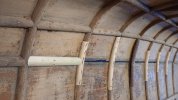
I don't have a picture of before I started filling planking. But only now do I notice this canoe has been pulled over rocks, sharp rocks. The lengthwise lacerations are numerus. I started filling the worse but soon realized I'd be filling the entire hull. In a canvas canoe nothing would show and none are bad enough to be structural. This planking is 1/8th inch. Canvas covered is typically 1/16th. I may opt for a paint that fills, porch paint I'm told.
I'm open to suggestions..........
I don't have a picture of before I started filling planking. But only now do I notice this canoe has been pulled over rocks, sharp rocks. The lengthwise lacerations are numerus. I started filling the worse but soon realized I'd be filling the entire hull. In a canvas canoe nothing would show and none are bad enough to be structural. This planking is 1/8th inch. Canvas covered is typically 1/16th. I may opt for a paint that fills, porch paint I'm told.
I'm open to suggestions..........
Attachments
Last edited:

Treewater
Wooden Canoes are in the Blood
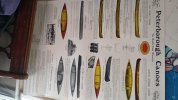
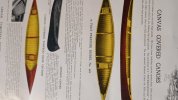
I'm seeing three terms for non-canvas. "Rib and battan"..... what I have now.... longitudinal strip, and cedar rib. Of the canvas covered, there's no mention of the type planking.Were any of these wide board canoes canvas covered?
Attachments

Treewater
Wooden Canoes are in the Blood
I have a longitudinal planking canoe... no canvas. What we are calling "wide board" can be two things....three boards, (what I'm working on now)...or four boards which is the photo earlier that I tried to stop leaking with tape and foam. The simple answer...there are three Peterborough non-canvas canoes. I have two. The "cedar rib", where the "planking" is transverse the canoe, I've not seen. I'm presuming Peterborough set the pace, at least in terminology. That third picture above would be "longitudinal strip." I hope that's clear.
Last edited:
Michael Grace
Lifetime Member
To add some details and photos:
All-wood canoes were built in a wide variety of manners, especially if you add into the mix builders from the US and Europe. The old Canadian builders themselves produced a variety of kinds of all-wood canoes, and their history evolution began long before the Peterborough Canoe Company started in 1892. Canadian all-wood canoes included:
1. Rib and batten canoes, also known as wide-board canoes such as the Bush being discussed here. These are most often seen with basswood planking, though they were also built of cedar, cypress or mahogany, with widely-spaced interior ribs. The battens are made of rib stock.

14' Peterborough rib and batten
2. Metallic joint canoes, in which wide boards were joined along their edges with brass or copper strips, somewhat like an extremely long staple that runs the full length of each joint from bow to stern. The battens are visible between the narrow ribs lying interior to the planking and battens.

Metallic joint
3. Flush batten canoes. Built like metallic joint canoes except that w wooden batten is used. It is half the planking thickness and is mounted into a rabbet that runs along each interior plank edge.

15' Lakefield flush batten
4. Double cedar canoes. Made by Dan Herald, Herald Bros, and then the Rice Lake Canoe Company. These have wide exterior planking running lengthwise, narrower inner planking (about 4” wide) running gunwale to gunwale, and a resin-impregnated muslin layer in between the two layers of planking. There are no ribs in this construction, though sometimes the interior planking has been referred to as “ribs.”

15' Daniel Herald patent double cedar
5. Cedar rib canoes. These have a single layer of planking running gunwale to gunwale, and these “ribs” mate with each other via tiny tongue-and-groove joints. Along with the gunwales and keel, lengthwise hardwood battens held everything together with a fastener through each “rib” each the batten.

16' Peterborough cedar rib
6. Longitudinal strip canoes. Numerous narrow ribs with narrow lengthwise planking nailed on, each plank joining the other via half-lap joints. Sometimes they were made with alternating species of wood to produce the pattern shown here (sometimes called "candy stripe" today).

16' Canadian Canoe Co. longitudinal strip
Generally, all-wood canoes were just that – wooden hulls without canvas covering. However, it is possible that all-wood canoes could be covered with canvas from the factory, and they certainly have been covered sometimes by users and restorers. The usual factory-made canvas-covered Canadian canoes were built just as American cedar-canvas canoes were, with thin cedar planking tacked to wide cedar ribs, after which canvas is stretched on and waterproofed.
Some canoe models from Canadian builders were available in a variety of construction methods. For example, you might purchase a given Peterborough model in rib-and-batten, longitudinal strip, or cedar-canvas construction:


All-wood canoes were built in a wide variety of manners, especially if you add into the mix builders from the US and Europe. The old Canadian builders themselves produced a variety of kinds of all-wood canoes, and their history evolution began long before the Peterborough Canoe Company started in 1892. Canadian all-wood canoes included:
1. Rib and batten canoes, also known as wide-board canoes such as the Bush being discussed here. These are most often seen with basswood planking, though they were also built of cedar, cypress or mahogany, with widely-spaced interior ribs. The battens are made of rib stock.
14' Peterborough rib and batten
2. Metallic joint canoes, in which wide boards were joined along their edges with brass or copper strips, somewhat like an extremely long staple that runs the full length of each joint from bow to stern. The battens are visible between the narrow ribs lying interior to the planking and battens.
Metallic joint
3. Flush batten canoes. Built like metallic joint canoes except that w wooden batten is used. It is half the planking thickness and is mounted into a rabbet that runs along each interior plank edge.
15' Lakefield flush batten
4. Double cedar canoes. Made by Dan Herald, Herald Bros, and then the Rice Lake Canoe Company. These have wide exterior planking running lengthwise, narrower inner planking (about 4” wide) running gunwale to gunwale, and a resin-impregnated muslin layer in between the two layers of planking. There are no ribs in this construction, though sometimes the interior planking has been referred to as “ribs.”
15' Daniel Herald patent double cedar
5. Cedar rib canoes. These have a single layer of planking running gunwale to gunwale, and these “ribs” mate with each other via tiny tongue-and-groove joints. Along with the gunwales and keel, lengthwise hardwood battens held everything together with a fastener through each “rib” each the batten.
16' Peterborough cedar rib
6. Longitudinal strip canoes. Numerous narrow ribs with narrow lengthwise planking nailed on, each plank joining the other via half-lap joints. Sometimes they were made with alternating species of wood to produce the pattern shown here (sometimes called "candy stripe" today).
16' Canadian Canoe Co. longitudinal strip
Generally, all-wood canoes were just that – wooden hulls without canvas covering. However, it is possible that all-wood canoes could be covered with canvas from the factory, and they certainly have been covered sometimes by users and restorers. The usual factory-made canvas-covered Canadian canoes were built just as American cedar-canvas canoes were, with thin cedar planking tacked to wide cedar ribs, after which canvas is stretched on and waterproofed.
Some canoe models from Canadian builders were available in a variety of construction methods. For example, you might purchase a given Peterborough model in rib-and-batten, longitudinal strip, or cedar-canvas construction:
Last edited: