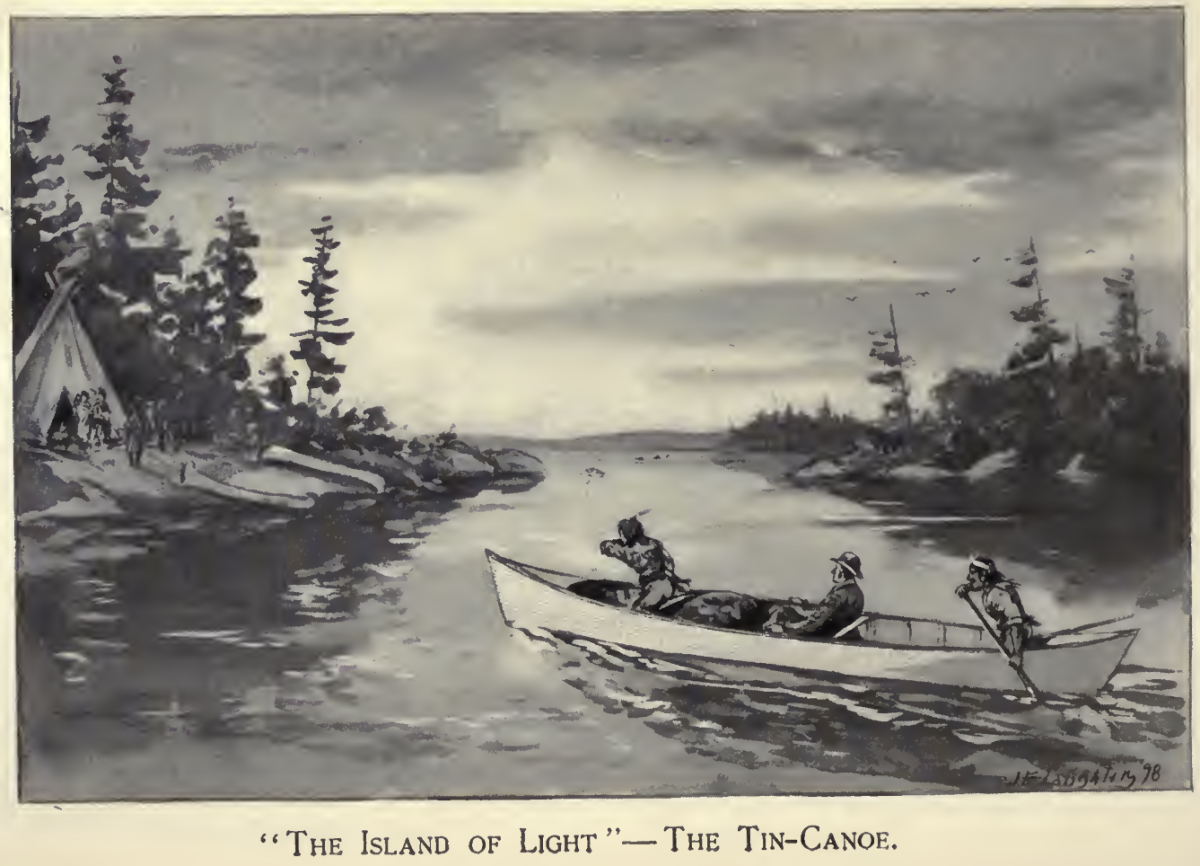
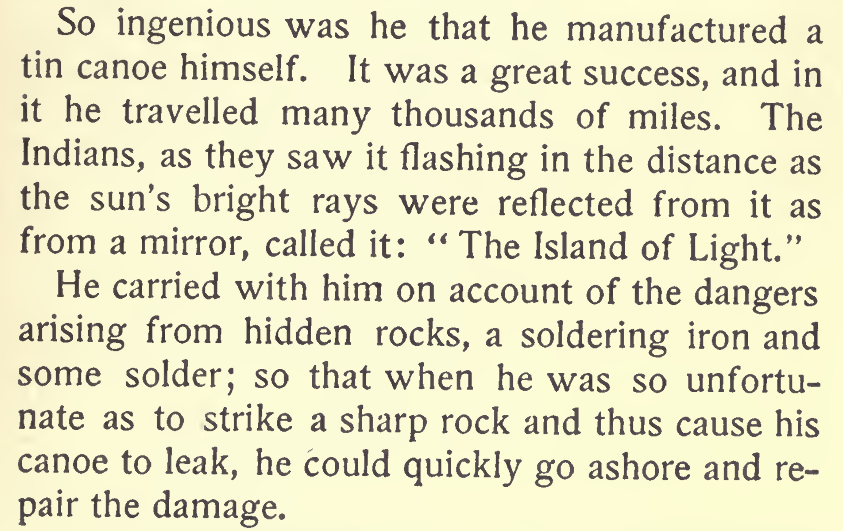
Benson’s very illuminating information about the “tin canoe” used by Rev. Evans in the far north of Canada in the 1840’s certainly demonstrates that Grumman did not originate the metal canoe. Ah well, you say, that was just an early ‘one-off’, not a commercial object of multiple manufacture. Well, there’s still proof that Grumman was not the first.
As mentioned in Benson’s original post, my decoy and canoe-collecting friend, Tom Penniston, of WI, and I have been looking into such matters. Most of the research credit goes to Tom; I have simply been coaching him along.
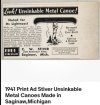
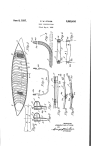
Tom has turned up a US Patent, #2,083,410 (see photo) in the name of C W Stiver, of Saginaw, MI, first applied for on 4 May 1935, and granted on 8 June 1937. A Canadian patent followed in 1939. This puts him a decade prior to the Grumman factory. Mr. Stiver’s canoe was made of ‘Dowmetal’, an early magnesium alloy. The proof that this was a commercial venture is established by advertisements (see below) which were published nationally; the earliest of these seems to have been in Colliers, in June, 1938; then in Sports Afield in May, 1939; and the last (as shown) in 1941, just prior to his passing. The New York Times of 18 December 1941 posted the following obituary:
“Charles W. Stiver, founder of the Saginaw Shipbuilding Company, which built vessels for the government during the first World War, died yesterday at his home here at the age of 70. A pioneer Great Lakes shipbuilder, Mr. Stiver was for many years secretary-treasurer of the A. W. Wheeler Shipbuilding Company at Bay City, Mich., which constructed many of the freighters now in use. He also invented a light metal canoe and headed a company which manufactured them in Saginaw…”
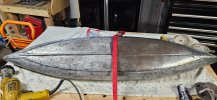
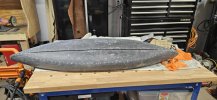
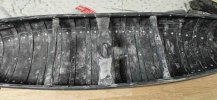
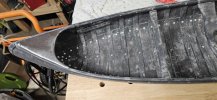
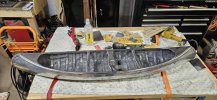
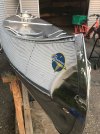
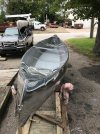
The stimulus for this research came about when Tom recently acquired a 48” display sample of a rather sad-looking but extremely interesting metal canoe (see photos); he sought my help. It was decided that removing the remaining badly peeling paint was in order, along with background research. The previous owner had been unable to learn anything other than that his grandfather, of Saginaw, had long treasured it. The canoe passed from grandfather to his mother, then to him. Tom searched patent records on metal and aluminum canoes, which turned up Mr. Stiver’s name and a connection to Saginaw. On then going back to the previous owner, it turned out that his grandfather was either a very close friend of, or possibly even related to, Charles Stiver. A very happy coincidence. So, it seems, Tom may have become the owner of a prototype or display sample of one of the earliest, commercially-made metal canoes. I have included some photos of the canoe as found along with some of the cleaning/polishing process. The work continues; inside yet to be polished .....
As Benson earlier said, this group and its site is all about wooden and wood-canvas canoes. But it’s hard not to enjoy a bit of history, including that of competitive canoe makers.