The origins of Grumman's aluminum canoe and some other early metal canoes

Benson Gray

Canoe History Enthusiast
Staff member
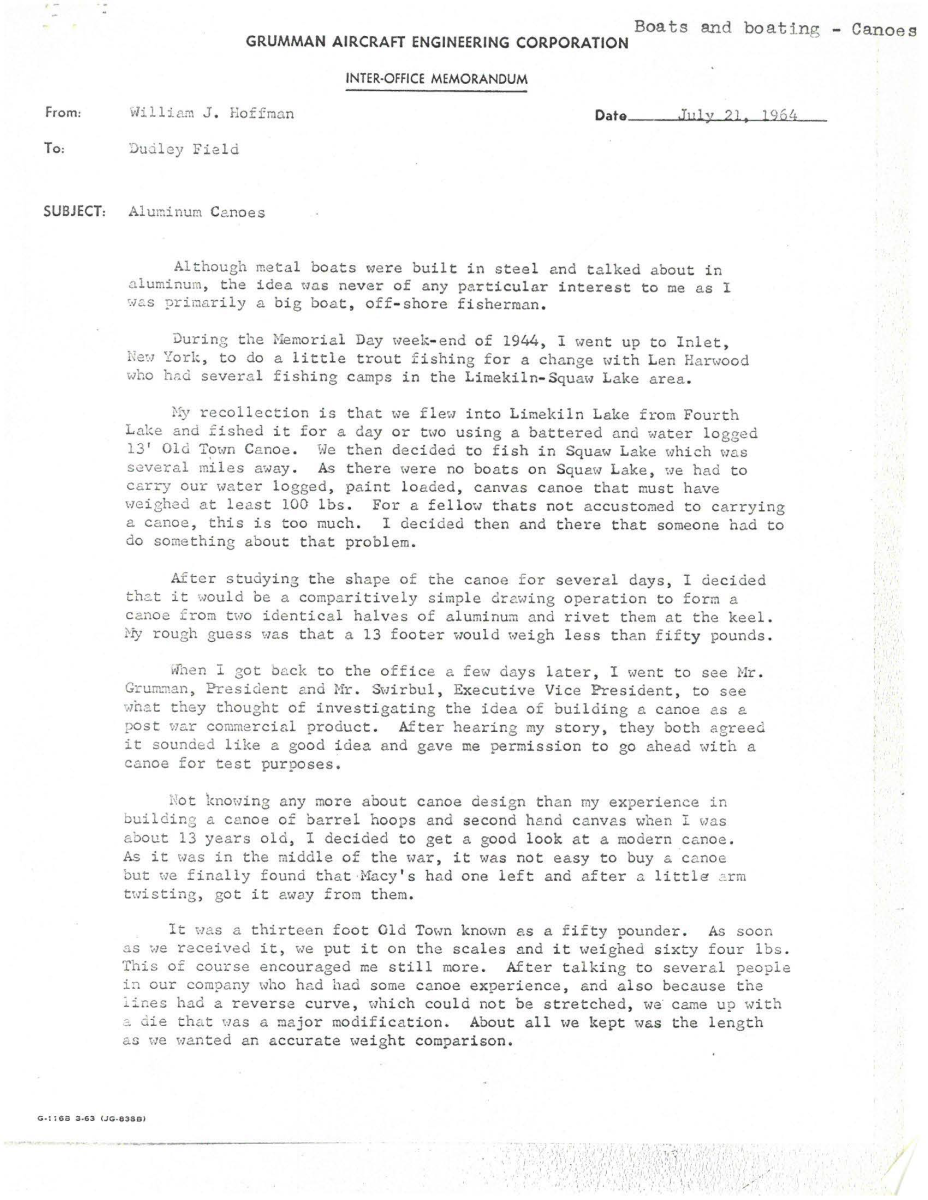
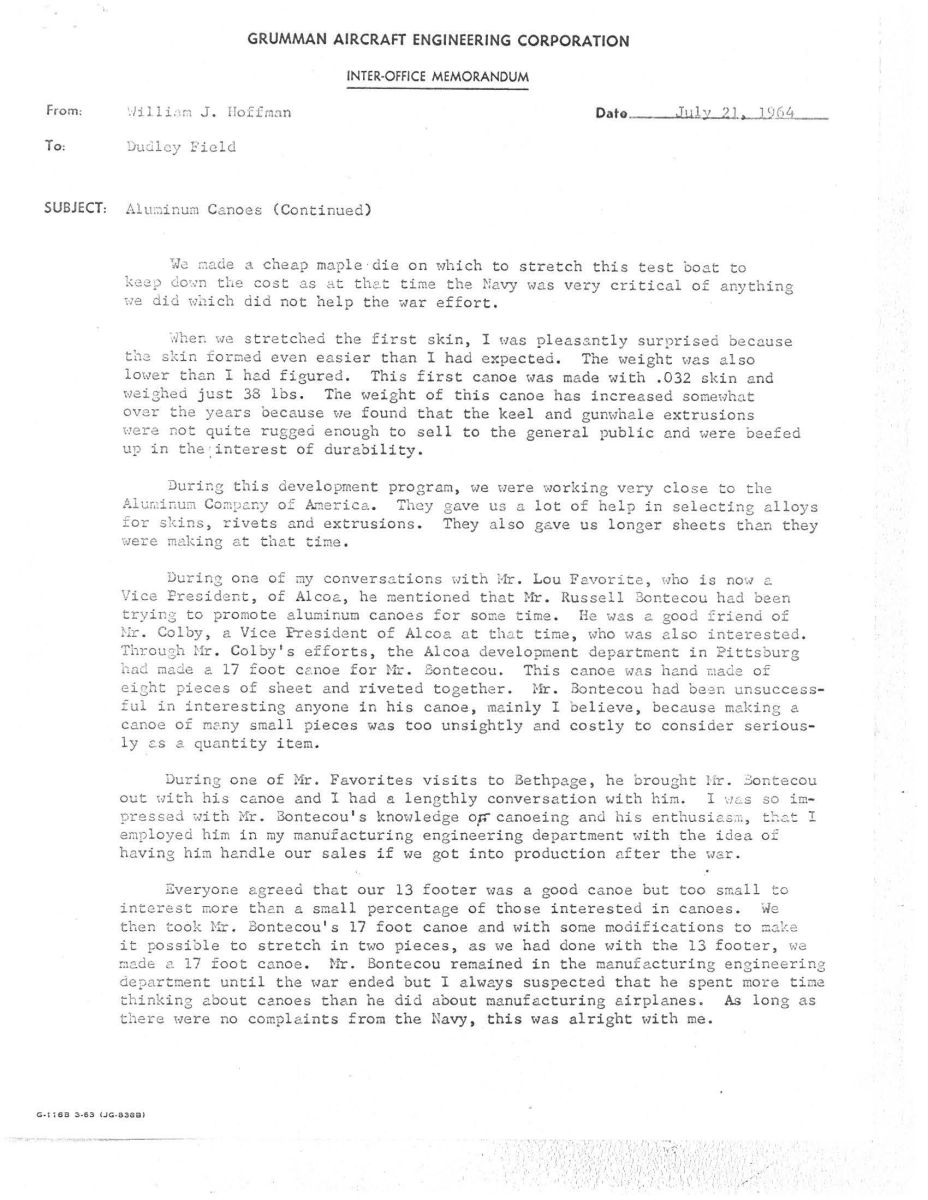
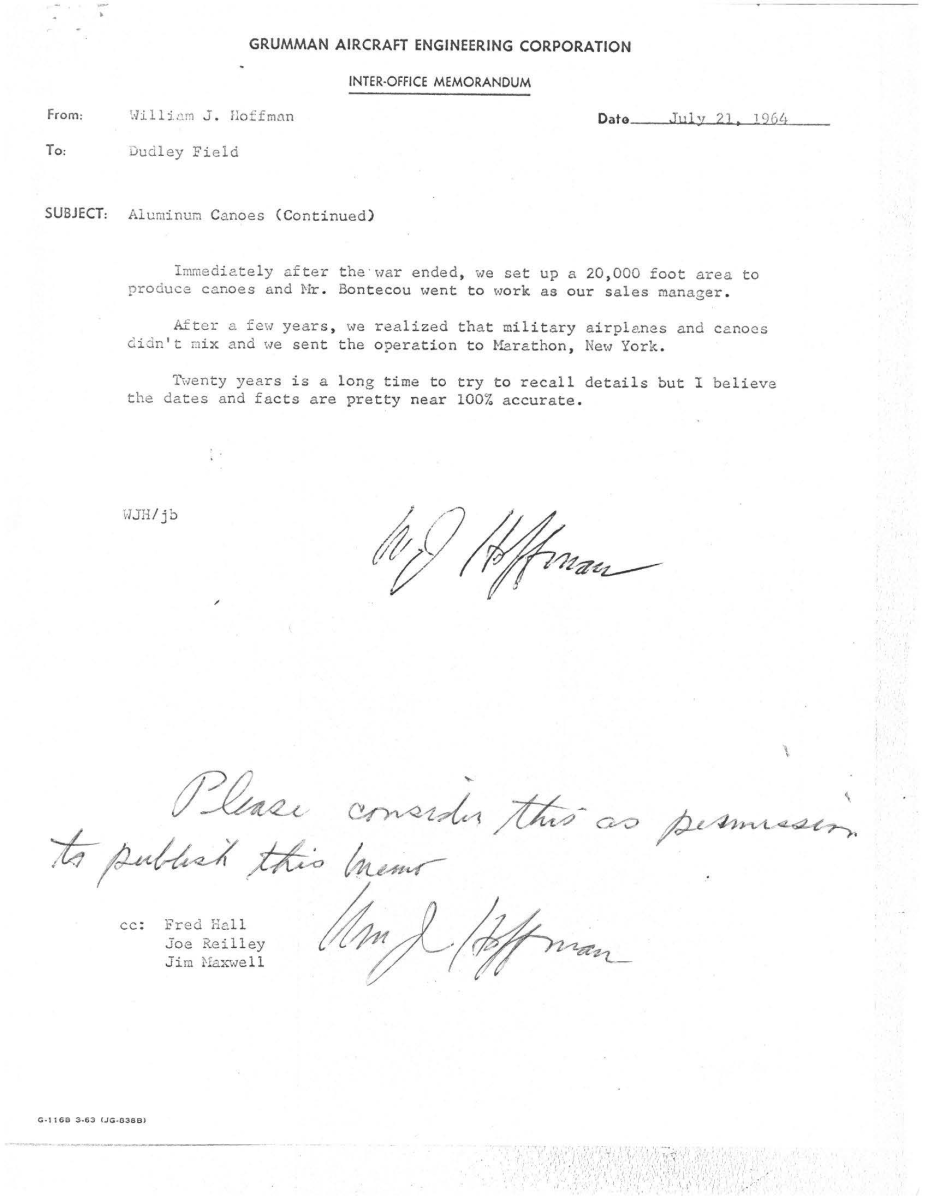
I recognize that this is a forum for wooden canoes but there might be some interest in a brief look at the origins of Grumman's aluminum canoe. The attached letter from William Hoffman has been kindly shared from the collection at the Adirondack Experience. This confirms that a wooden Old Town Fifty Pound model was the first prototype.

1778532340853.png

1778532364761.png

1778532381554.png


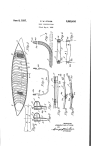
Tom Penniston and Roger Young has been researching a small aluminum display model recently and found a patent at https://patents.google.com/patent/US2083410A/ for an aluminum canoe with “individual hollow tubular buoyant ribs” from 1937.

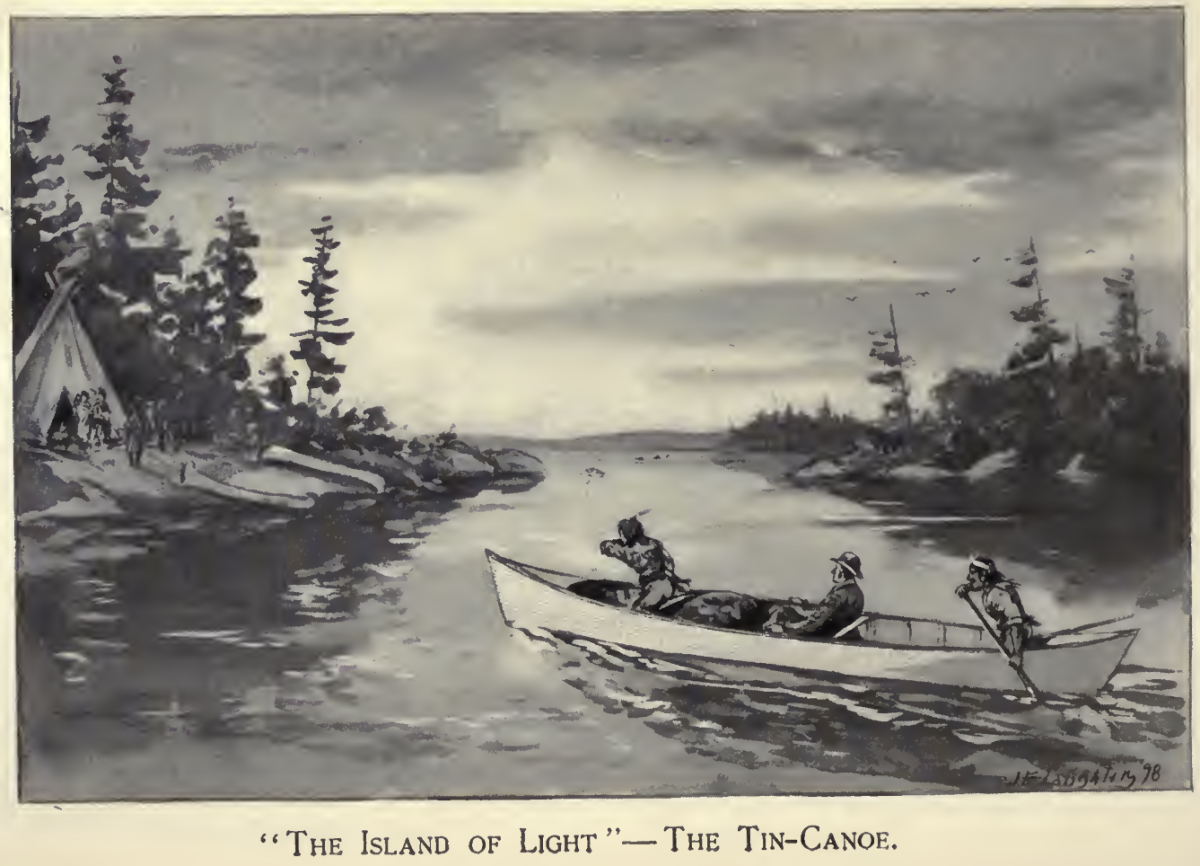
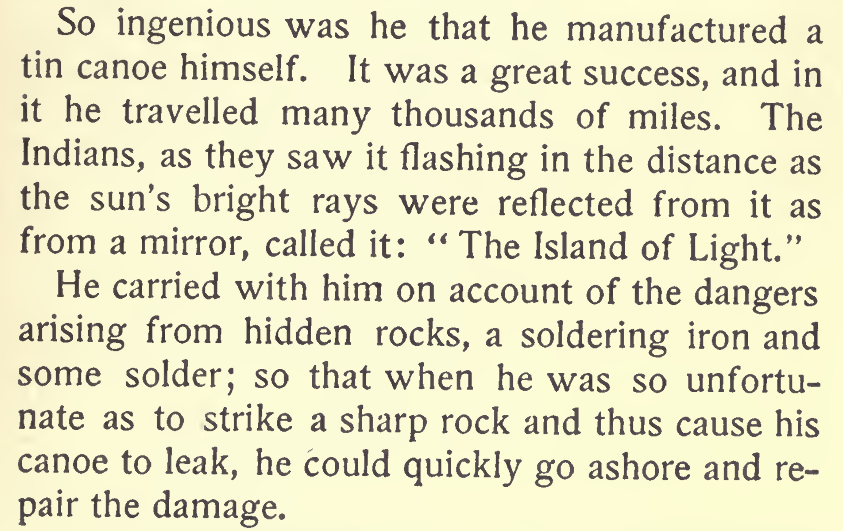
The book at https://www.electriccanadian.com/lifestyle/apostleofthenorth.pdf describes a "tin canoe" made by James Evans in the 1840s as shown below from page 243.

1778533093414.png


1778533154458.png
 
Last edited:
I have never wrapped an aluminum canoe around a rock, but I know of folks who have. I have seen the result. An aluminum canoe will permanently wrap around a rock in big water. They are generally impossible retrieve after this happens. In shallow water, they leave their mark on every rock, a shiny silver trail. I once dropped a hatchet through the bottom of one and a paddling partner opted to ignore my recommended line and sliced the bottom of his brand new "light weight" open. I was able to retrieve my paddles. His canoe was toast as was our participation in that race.
Our family joke has always been "what is the best canoe to run rapids in?" The answer, a borrowed aluminum canoe. They paddle like bathtubs, they sound like a kettle drum parade in the hands of a scout troop or bouncing in haystacks, but you can leave them on the shoreline of your pond, and they truly were a lighter alternative.
It's interesting to learn how they came to be.
Just a few miles North from Marathon, Thompson built wood and canvas canoes and boats. Presumably these might be featured as NY builders at this year's assembly.
 
Benson, et al,

Wow ! I am belatedly joining this conversation which is directly related to a request I'm trying to satisfy in the records of the Office of the Surveyor General of Ontario.

In 1837 the government of then Upper Canada contracted surveys for the possibility "of establishing a practical water communication between Lake Huron and the Ottawa River"... One of 3 survey parties was led by famed HBC and NW Company explorer/surveyor David Thompson and tasked with finding a route through Muskoka and Madawaska rivers. Eventually resulting in the first accurate surveys of what have become well travelled canoe routes through Algonquin Park, but i digress....

Preparing for his surveys, Thompson built cedar canoes for the expedition, against the advice of Capt. Baddeley,( Royal Engineer assigned to Thompsons' party) who preferred that tin canoes be used".
Extract from a letter of Baddeley dated July 19th 1837:
"...It would have been better in all respects if tin canoes had been employed . We were nearly purchasing one in 1835 and then heard them much recommended. It was against my opinion that Cedar canoes were built, but Mr. Thompson seemed so pressing on this point that it (was) conceded to him..."

From David Thompsons "Journal of Occurrences from Lake Huron to the Ottawa River" :
August 5th 1837 "...Messrs Taylor& Hawkins set off each with 3 men & each having the cedar and a small canoe. Mr Hawkins a tin canoe of 14ft & 40 in on the Mid Bar& Mr Taylor a similar Canoe of birch rind."

(From "Muskoka and Haliburton, 1615-1875 A collection of Documents", the Champlain Society, 1963)

These letters and journal entries indicate that not only were "tin canoes" a known commodity, but also that they were commercially available.
What would tin canoes have been like in 1835? Where would they come from? Was the Royal Navy using something like that at the time?
Any help or direction you can point would be greatly appreciated!

Bruce
 
Benson’s very illuminating information about the “tin canoe” used by Rev. Evans in the far north of Canada in the 1840’s certainly demonstrates that Grumman did not originate the metal canoe. Ah well, you say, that was just an early ‘one-off’, not a commercial object of multiple manufacture. Well, there’s still proof that Grumman was not the first.

As mentioned in Benson’s original post, my decoy and canoe-collecting friend, Tom Penniston, of WI, and I have been looking into such matters. Most of the research credit goes to Tom; I have simply been coaching him along.

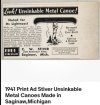
Tom has turned up a US Patent, #2,083,410 (see photo) in the name of C W Stiver, of Saginaw, MI, first applied for on 4 May 1935, and granted on 8 June 1937. A Canadian patent followed in 1939. This puts him a decade prior to the Grumman factory. Mr. Stiver’s canoe was made of ‘Dowmetal’, an early magnesium alloy. The proof that this was a commercial venture is established by advertisements (see below) which were published nationally; the earliest of these seems to have been in Colliers, in June, 1938; then in Sports Afield in May, 1939; and the last (as shown) in 1941, just prior to his passing. The New York Times of 18 December 1941 posted the following obituary:

“Charles W. Stiver, founder of the Saginaw Shipbuilding Company, which built vessels for the government during the first World War, died yesterday at his home here at the age of 70. A pioneer Great Lakes shipbuilder, Mr. Stiver was for many years secretary-treasurer of the A. W. Wheeler Shipbuilding Company at Bay City, Mich., which constructed many of the freighters now in use. He also invented a light metal canoe and headed a company which manufactured them in Saginaw…”

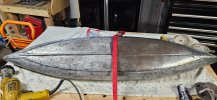
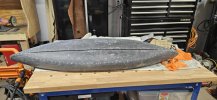
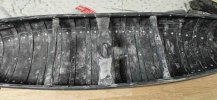
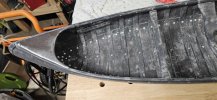
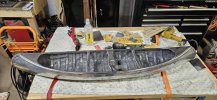
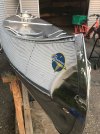
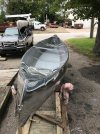
The stimulus for this research came about when Tom recently acquired a 48” display sample of a rather sad-looking but extremely interesting metal canoe (see photos); he sought my help. It was decided that removing the remaining badly peeling paint was in order, along with background research. The previous owner had been unable to learn anything other than that his grandfather, of Saginaw, had long treasured it. The canoe passed from grandfather to his mother, then to him. Tom searched patent records on metal and aluminum canoes, which turned up Mr. Stiver’s name and a connection to Saginaw. On then going back to the previous owner, it turned out that his grandfather was either a very close friend of, or possibly even related to, Charles Stiver. A very happy coincidence. So, it seems, Tom may have become the owner of a prototype or display sample of one of the earliest, commercially-made metal canoes. I have included some photos of the canoe as found along with some of the cleaning/polishing process. The work continues; inside yet to be polished .....

As Benson earlier said, this group and its site is all about wooden and wood-canvas canoes. But it’s hard not to enjoy a bit of history, including that of competitive canoe makers.

 

Attachments

  • 520 (1).jpg
    520 (1).jpg
    184.6 KB · Views: 39
  • paint-removed-3.jpg
    paint-removed-3.jpg
    125.4 KB · Views: 33
  • paint-removed-2.jpg
    paint-removed-2.jpg
    151.1 KB · Views: 28
  • paint-removed-1.jpg
    paint-removed-1.jpg
    139.6 KB · Views: 28
  • salesmans sample aluninum-canoe-3.jpg
    salesmans sample aluninum-canoe-3.jpg
    244 KB · Views: 29
  • salesmans sample aluninum-canoe-2.jpg
    salesmans sample aluninum-canoe-2.jpg
    165.3 KB · Views: 28
  • salesmans sample aluninum-canoe-1.jpg
    salesmans sample aluninum-canoe-1.jpg
    245.4 KB · Views: 29
  • Ad for Stiver Unsinkable Canoe.jpg
    Ad for Stiver Unsinkable Canoe.jpg
    37 KB · Views: 29
  • US2083410-drawings-page-1.png
    US2083410-drawings-page-1.png
    236.4 KB · Views: 33
  • Stiver-Canoe-Outside-Polished-2.jpg
    Stiver-Canoe-Outside-Polished-2.jpg
    143.6 KB · Views: 34
Last edited:
Charles W. Stiver, ... invented a light metal canoe and headed a company which manufactured them in Saginaw…

The link below has some pictures of a full sized example that sold at an auction in 2018.

Benson


1778682639512.png
 
Roger, this is fascinating!
But what lets them claim it is unsinkable? Magnesium alloy, as light as it might be, still weighs more than water. Was there flotation in the gunwales or decks?
 
Roger, this is fascinating!
But what lets them claim it is unsinkable? Magnesium alloy, as light as it might be, still weighs more than water. Was there flotation in the gunwales or decks?
Here is the link to Stiver's patent. It will explain his claim to buoyancy. https://patents.google.com/patent/U...500101&after=priority:19200101&scholar&page=6.
In short, the answer is the incorporation of 'flattened' hollow tubes with sealed ends which constitute the ribs, along with similar sealed hollow extrusions for gunnels and longitudinal stringers. Grumman claimed that its first full-size canoe prototype weighed only 38 pounds. Stiver stated that his magnesium alloy canoe weighed 1/3 less than if he had used aluminum. Thus, a light-weight craft with in-built buoyancy (possibly also utilizing sealed air chambers in the ends).
 
Last edited:
Back
Top