Strip canoe shellac bottom?

Huron15

Curious about Wooden Canoes
Hello!
First post, but I’ve visited the forum and found it a great source of info. I Appreciate all the knowledge and experience that has been shared.

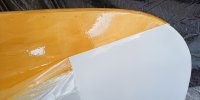
Given all the knowledge and experience, I am very curious to know if anyone has used shellac on the bottom of a strip canoe.

All the reasons for using it on a wood and canvas canoe would seem to apply. I know that many or most like a bright finish on all sides of their strip canoe, and maybe the blotchy opaque brown is an instant deal breaker for them. I get that, but it’s just not an issue for me. I painted the outside of mine, and I ‘m fine with the way shellac looks on a canoe. I am more concerned with the benefits of (1) a slippery surface and scratch resistance and (2) simple maintenance.

Is there anyone out there who has done this or seen it done who would share their experience? Or can anyone at all see a good reason not to bother that I am overlooking? Does the hard surface of a strip canoe perhaps diminish the reported benefits on a more flexible wood canvas boat?

Thanks for any and all thoughts!
 
Two questions: 1) are you asking about the inside or outside of the canoe bottom? 2) is the strip construction covered with fiberglass?
I may not have the shellac answer for you, but these clarifications may help someone else provide your answer.
 
Two questions: 1) are you asking about the inside or outside of the canoe bottom? 2) is the strip construction covered with fiberglass?
I may not have the shellac answer for you, but these clarifications may help someone else provide your answer
Thanks. the Outside and construction is cedar strip with fiberglass.
 
Hi, good idea to use shellac. I love it because it's slippery and easy to reapply. You stated that you painted the outside of your strip canoe. Do you plan to shellac over paint? If so I'm interested in knowing if that can be done. I may be wrong, but if you can shellac over paint it shouldn't matter what type of construction the boat is.
 
it shouldn't matter what type of construction the boat is.
That was my thought, too, but I’ve found very little evidence on the internet that anyone does it.

I would sand and prep existing paint and shellac over it. I don’t see the need to take it back down to the glass/epoxy, and that would increase the overall time and effort such that I don’t think it would be worth it for me.
 
Leave the paint as it is the best UV protection for the epoxy. Sand the gloss off and then apply the shellac on top. UV radiation is generally the biggest danger for strippers, whether they are in the water or not.
 
Thanks to everyone for the responses. All noted and appreciated!

I think it’s a low risk, low cost, low effort experiment, so I’ll go ahead and give it a try when I get the chance. To satisfy my curiosity if nothing else. Doubtless there are more effective modern options like graphite and wetlander/gator glide products, but the low cost, easy maintenance, and reversibility of Shellac make it the only realistic alternative to a painted finish for me. The tradition behind shellac is kind of a fun bonus too.

Also, just to note, I painted the hull with a satin porch and floor (which looks virtually matte to me). It’s a relatively rough surface, so I do expect some improvement in sliding over logs and limbs. I do not expect shellac to help much with sand abrasion and certainly not with the odd concrete boat ramp I’ll inevitably scrape. Can’t hurt, though.

I’ll try to follow up here with results when I have them in case anyone is interested.
 
I have applied shellac on a boat, which I've built in a birchbark style process from plywood and cedar.
The (plywood) hull was first painted (epifanes monourethan) then sanded and shellac applied.
It works like on wood canvas canoes and should be refreshed every 1 or 2 years.
 

Attachments

  • IMG_20240412_160105.jpg
    IMG_20240412_160105.jpg
    57.7 KB · Views: 29
  • IMG_20240412_124729.jpg
    IMG_20240412_124729.jpg
    77.7 KB · Views: 29
Another question occurred to me. How will intense summer sun and temps near 100f affect shellac?When the canoe is on top of a car for most of a day, for instance. I found one post that described straps making an impression in the shellac, but no clear relationship to heat indicated. Any experiences with shellac and hot summer sun?
 
Last edited:
The straps can leave marks on the shellac, it can on paint too. The good news with the shellac is, you can sand the marks off and apply more shellac in probably 20 minutes, and be paddling a few hours later. I was never too concerned about the marks, and left them alone.

On the boat I have that is painted a flat red and would like to shellac, my plan was to repaint the bottom brown and then shellac over that. Maybe I should just shellac over the original paint first, just covering the scratched bottom area to see how it looks.
 
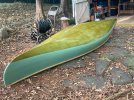
Three coats today, and I think I’d like to have one or even two more on. The canoe is painted a light grey-green, which comes through and highlights the patchy appearance of the shellac.

Everything that has been said about moving in short, short sections is right. I ended up moving down the hull in about 10 inch sections, brushing lengthwise keel to waterline.

Will have to make a point of getting on the water more to see how it holds up!
 

Attachments

  • IMG_7851.jpeg
    IMG_7851.jpeg
    591.6 KB · Views: 1
Back
Top