Old Town 1959 model 50 13ft

Eric-in-pa

New Member
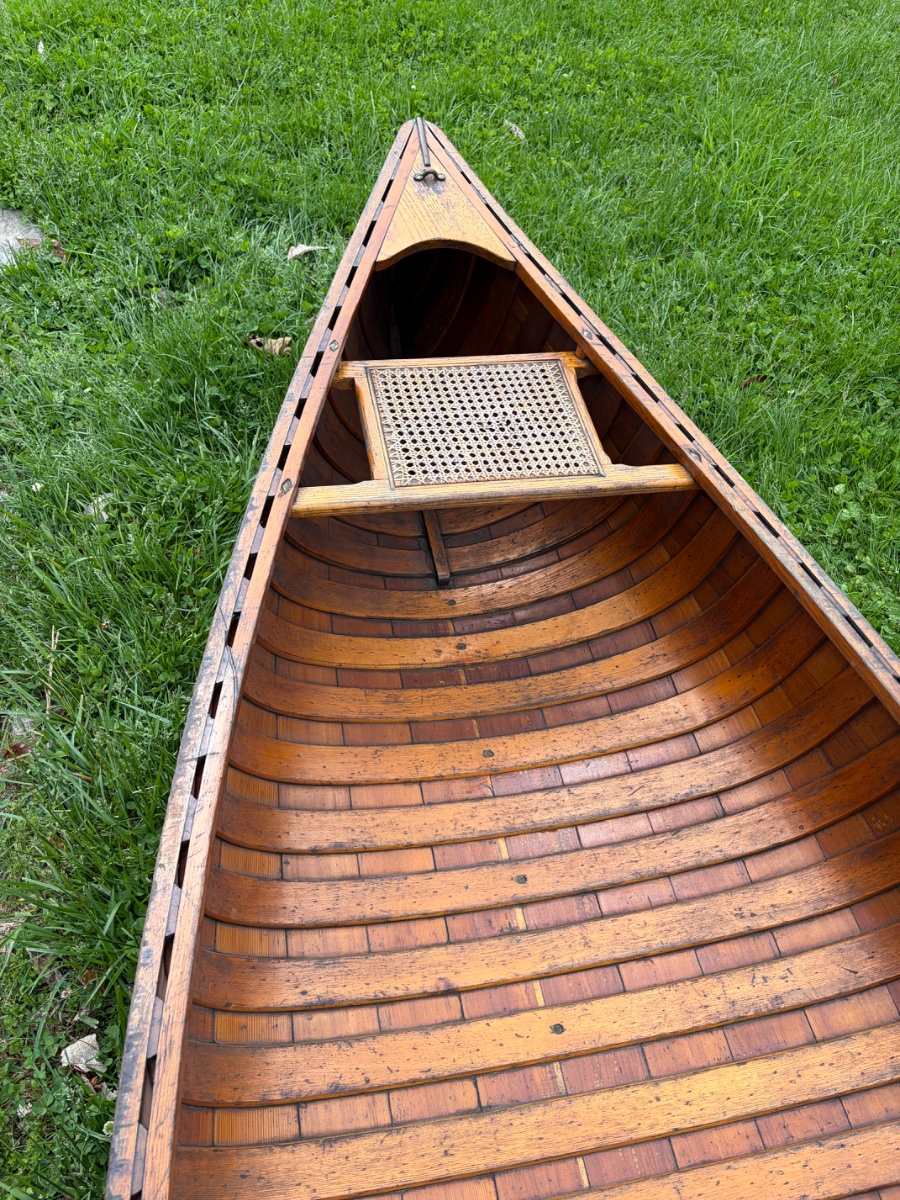
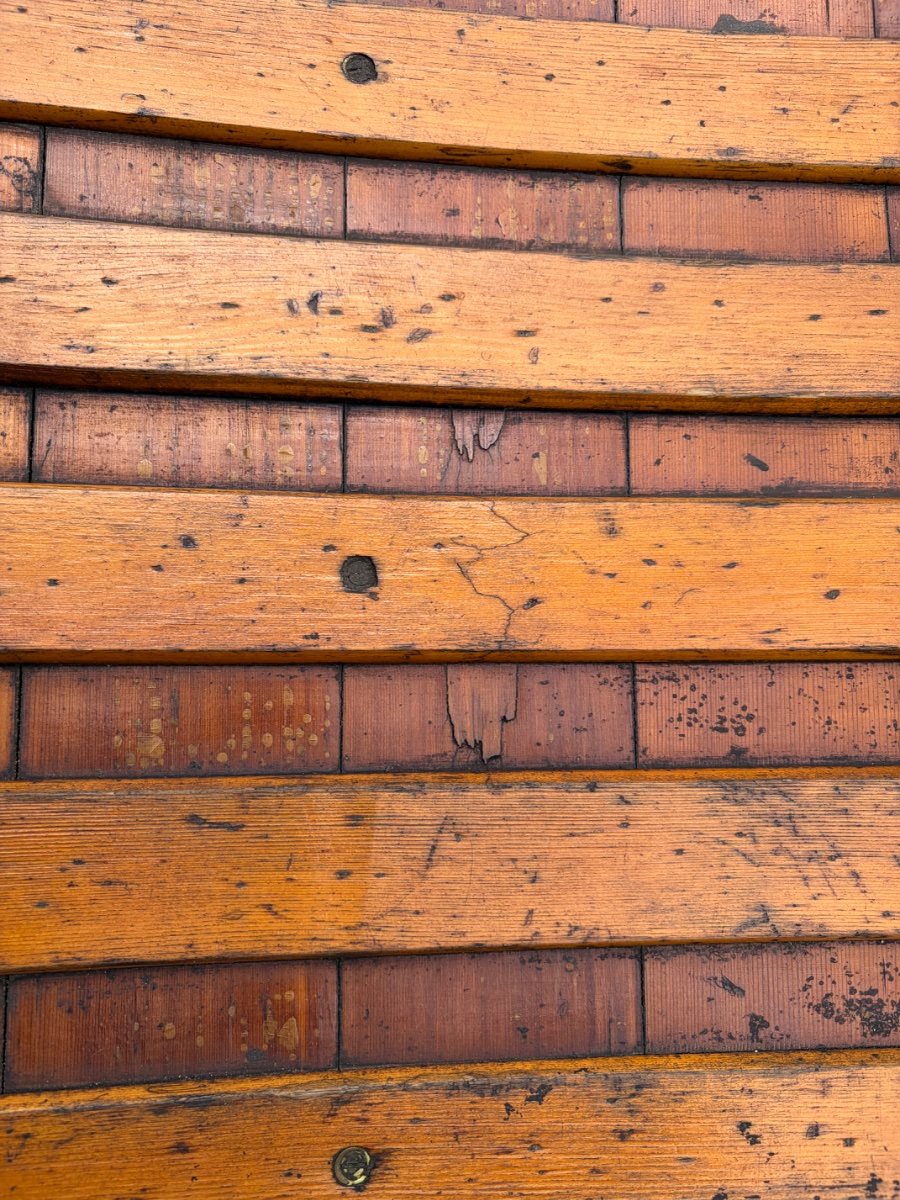
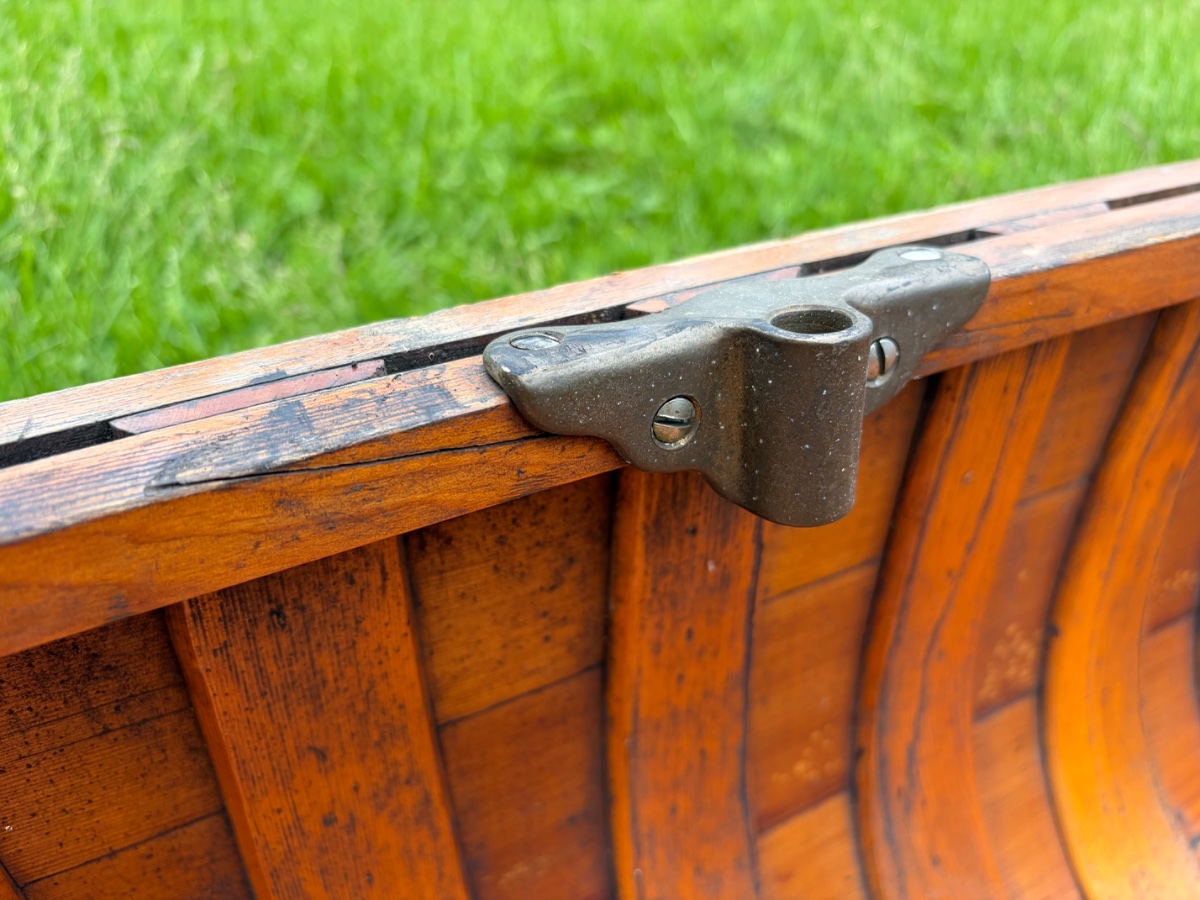
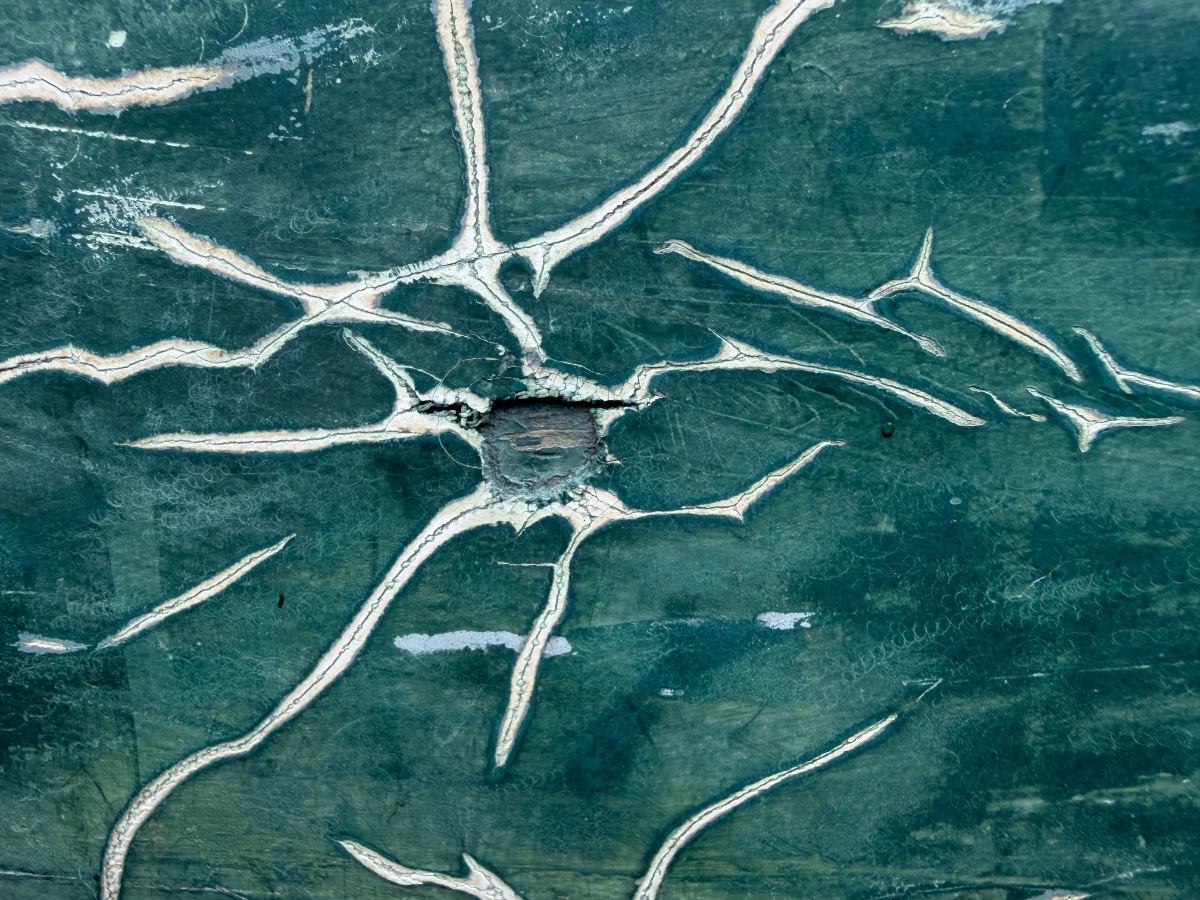
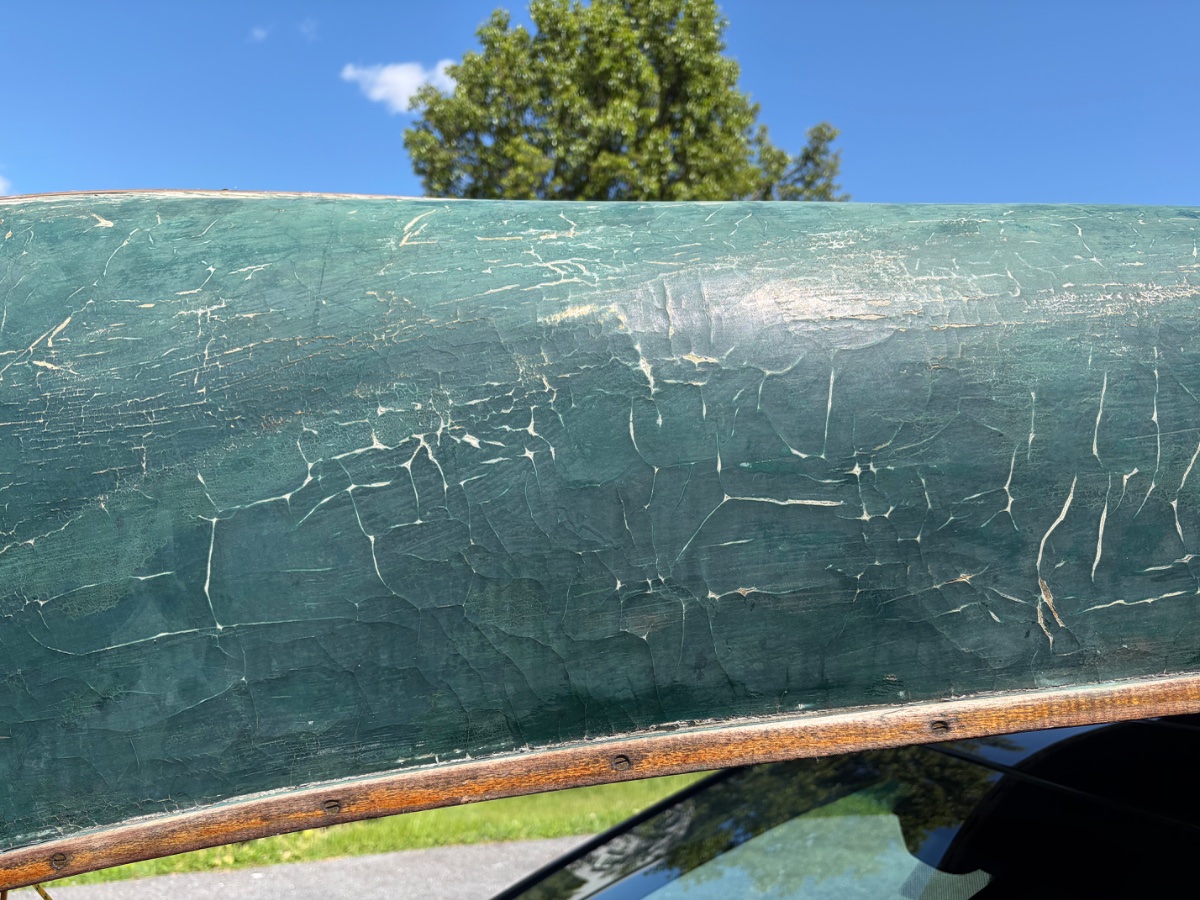
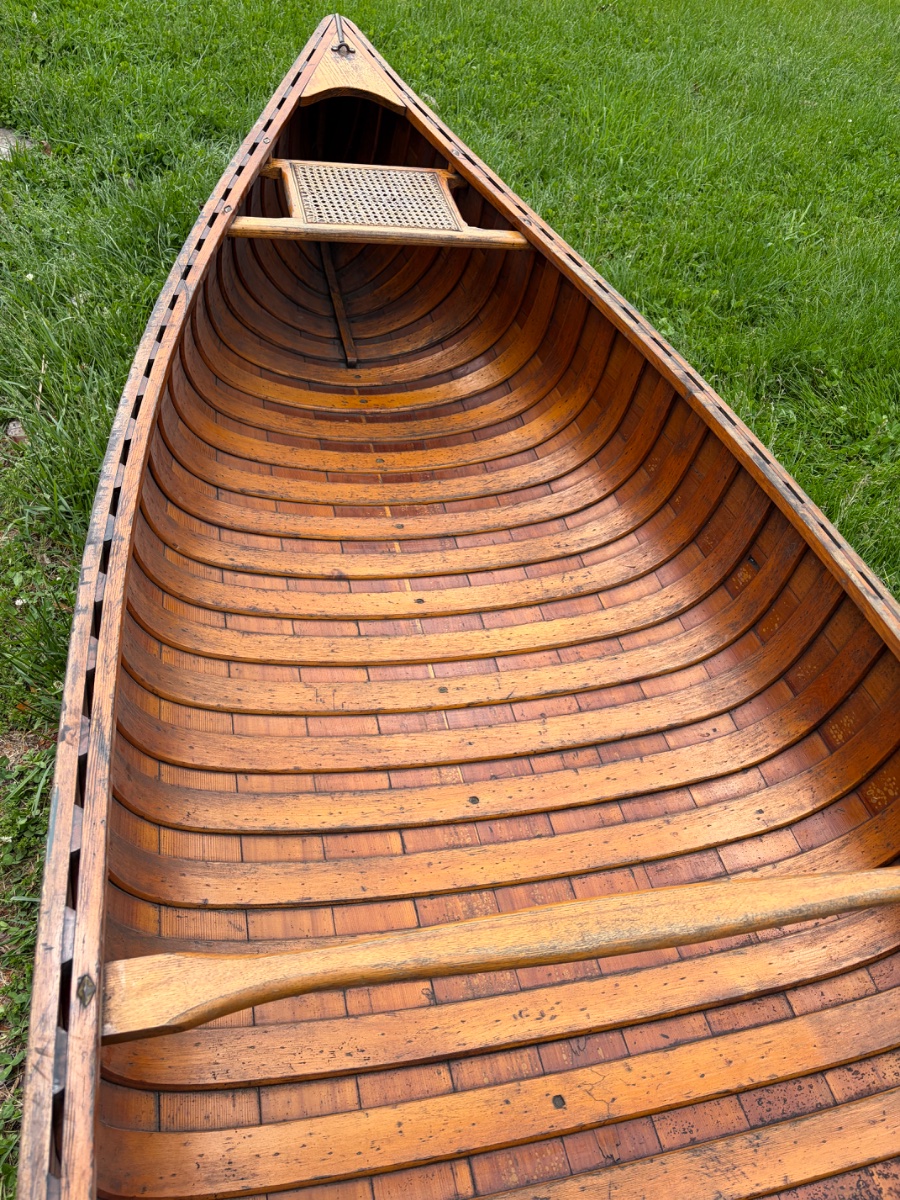
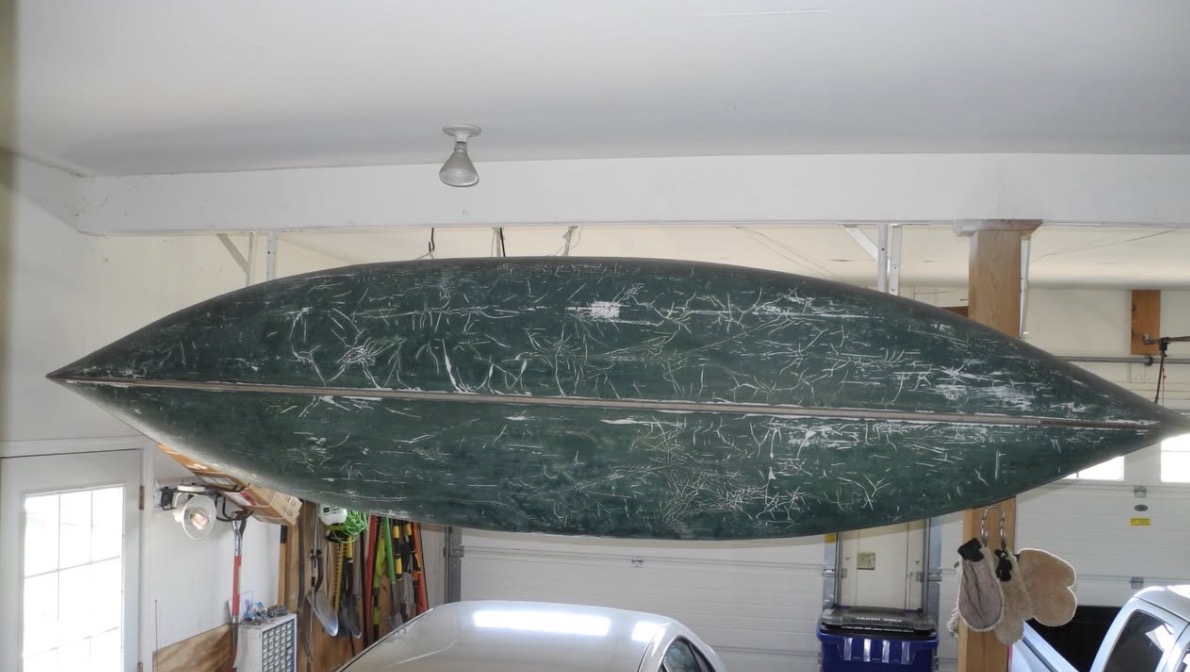
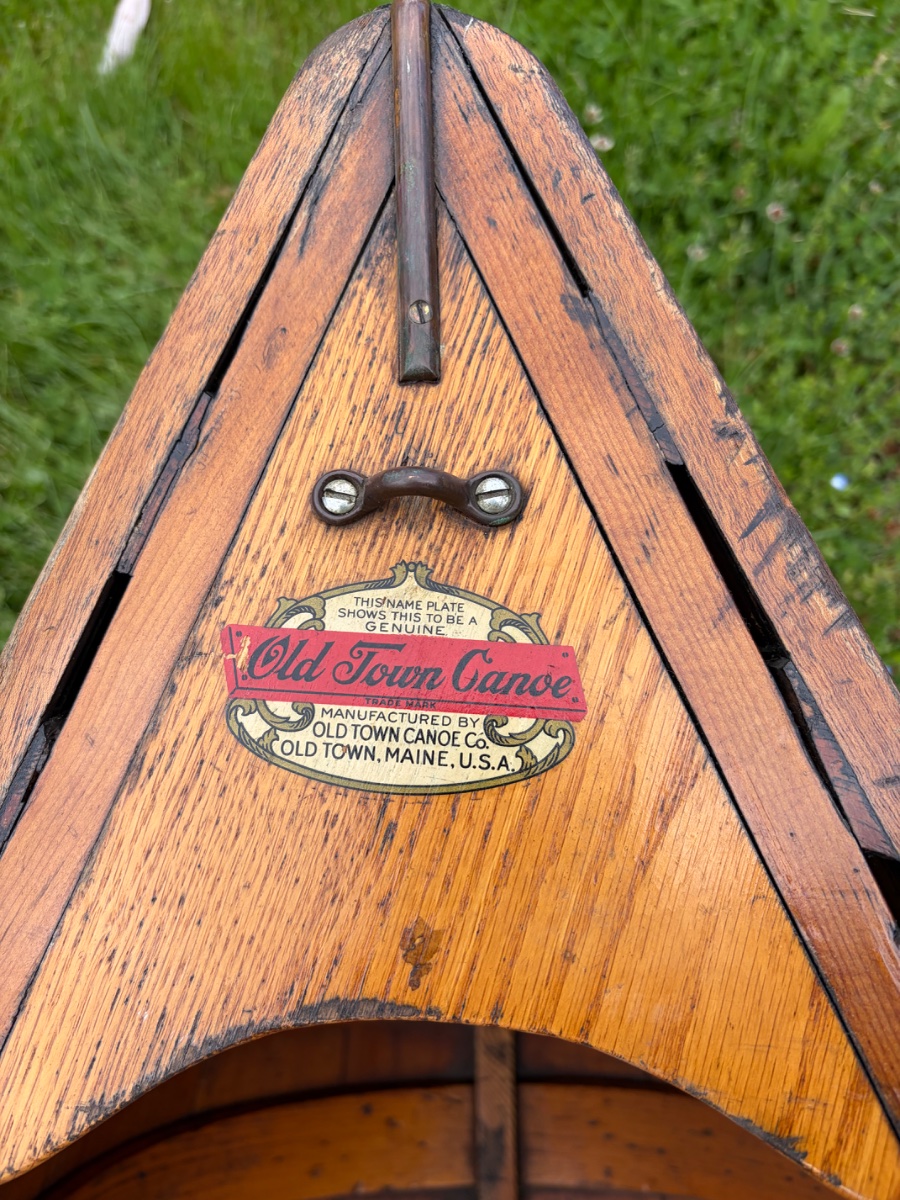
Hello everyone. I picked this up today locally. Th owner had it hanging in his garage for 20yrs, his late father was a canoe collector, and owned but likely never used this boat for at least another 20yrs. All I know from the seller is that it was always stored indoors, and the condition likely confirms that. The interior is impressively clean. There are no soft spots in the planks, and all ribs appear solid. The rib tips also look very good, with only a couple showing a slight split from the screw coming through the gunwales. There are two slight cracks on the very bottom of the planking, but those don’t look concerning. The canvas has a bit of a wrinkle to it, but I think that is from dried out old paint. There is one small canvas patch, and one hole about the size of a penny that needs to be patched. I don’t know if it is original, but at some point oar locks were installed. The bolt from one of them has caused a crack along the inwale, but I think that can be glued. The decal is in almost perfect condition. Overall, I think I got a great canoe here. I’d like your thoughts on how to repair/ refinish the canvas. Also, should I re- varnish the interior? Would that require sanding to bare wood? The keel is probably in the worst shape- the wood looks dried out but it isn’t broken .
IMG_3620.jpeg
IMG_3617.jpeg
IMG_3618.jpeg
IMG_3622.jpeg
IMG_3624.jpeg
IMG_3614.jpeg
IMG_3619.jpeg
IMG_3626.jpeg
 
Canoe canvas is commonly replaced every twenty years or so. This one appears to be ready for that now. The interior varnish doesn't look too bad so you may be able to simply sand lightly and add another coat. Good luck with the project,

Benson
 
Eric, as I said to another recent poster, when you have the canvas off that is the time to thoroughly refinish the interior. For instance, if you use a water soluble stripper like Citra Strip, your rinse water can just run out through the planking gaps. Much easier!
You could even remove one plank and do a back-side rib repair on that cracked rib. Just search this forum for details.
Good project and I wish you the best of luck!
 
I need to clear some workspace and then take the canvas off. I’m hoping I can reuse the outer gunwales. Not sure if the screw and holes will be good anymore. I suppose I can fill the holes and drill new ones.
 
The outside rails should be fine. Be careful removing the screws. Make sure your driver bit fits the slots tightly.
The inside rail split should be your priority. Remove the oar lock to get a look at that.
If you use an epoxy for the repairs, be sure to use G-flex. It has a slower cure time than the typical Lowes epoxies and it cures with a bit of flexibility. If Tight Bond is your thing, be sure to use TB3.
If you have the canvas off, you might consider doing a bit more to the finish on the inside. It looks like there is some bubbling in the varnish. I'd be curious if someone put a polyurethane finish over spar varnish. Whatever the case, be sure to take care of those spots while you have opportunity.
You could probably do a backside repair on that cracked rib while the canvas is off....or, you can replace the rib.
That is a nice canoe.
 
Hi Eric. Like most people new at canoe restoration (including most of us when we were new), you don't yet have a good sense of what is able to be saved. But here's the simple answer especially for a canoe like yours: almost all of the original structure can be saved or repaired without throwing out anything (except the canvas and old varnish). For a variety of reasons you're far better off to save everything you can. For example, your outwales look excellent. As Mike suggested, be careful removing screws so you don't break them or bugger up the wood. I'd suggest not using a power drill/driver because it can get away from you and if it does under pressure, it can really chew up the wood. Use standard screwdrivers as a starting point, and even then be careful. Any additional damage you do is a step in the wrong direction.

Don't take this as chastising or naysaying. I'm trying to say that you've got a great canoe there, and one that can teach you a lot. And most of it can be saved and made beautiful and highly functional again. It was once common here to hear the adage, "When in doubt, throw it out." NO! If you have any doubts, first look carefully and think carefully, and ask questions here. And if you don't already have one, get a good book. We often call this one "the Bible":


There's also "This Old Canoe" by Mike Elliott. From either of these you'll learn a great deal about how to effectively restore your canoe.

Take it easy, try your best to restore rather than rebuild this excellent canoe (it's much better than many we see here), and above all have fun restoring it and using it out on the water.
 
Back
Top