1938 Old Town 50# restoration

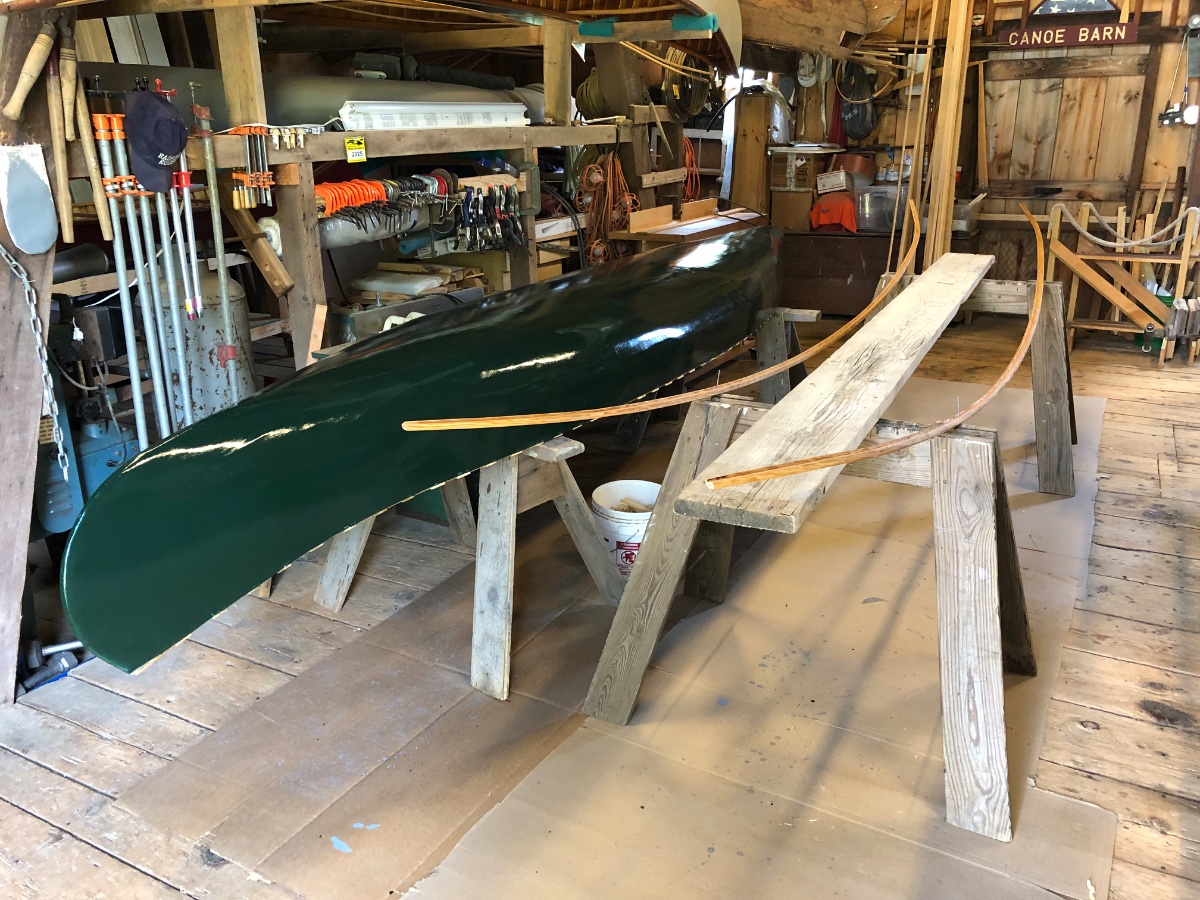
I just realized that I haven't kept up with updates. The canoe is nearing the finish line. Three coats of primer, and about to receive the last coat of finish paint, Kirby's #12 Bottle Green. The outwales were installed while the canoe was still in filler stage and shaped. I then removed them and varnished off the canoe while the painting was going on.

Prior to primer and paint, out in sunlight for the first time in about a year.
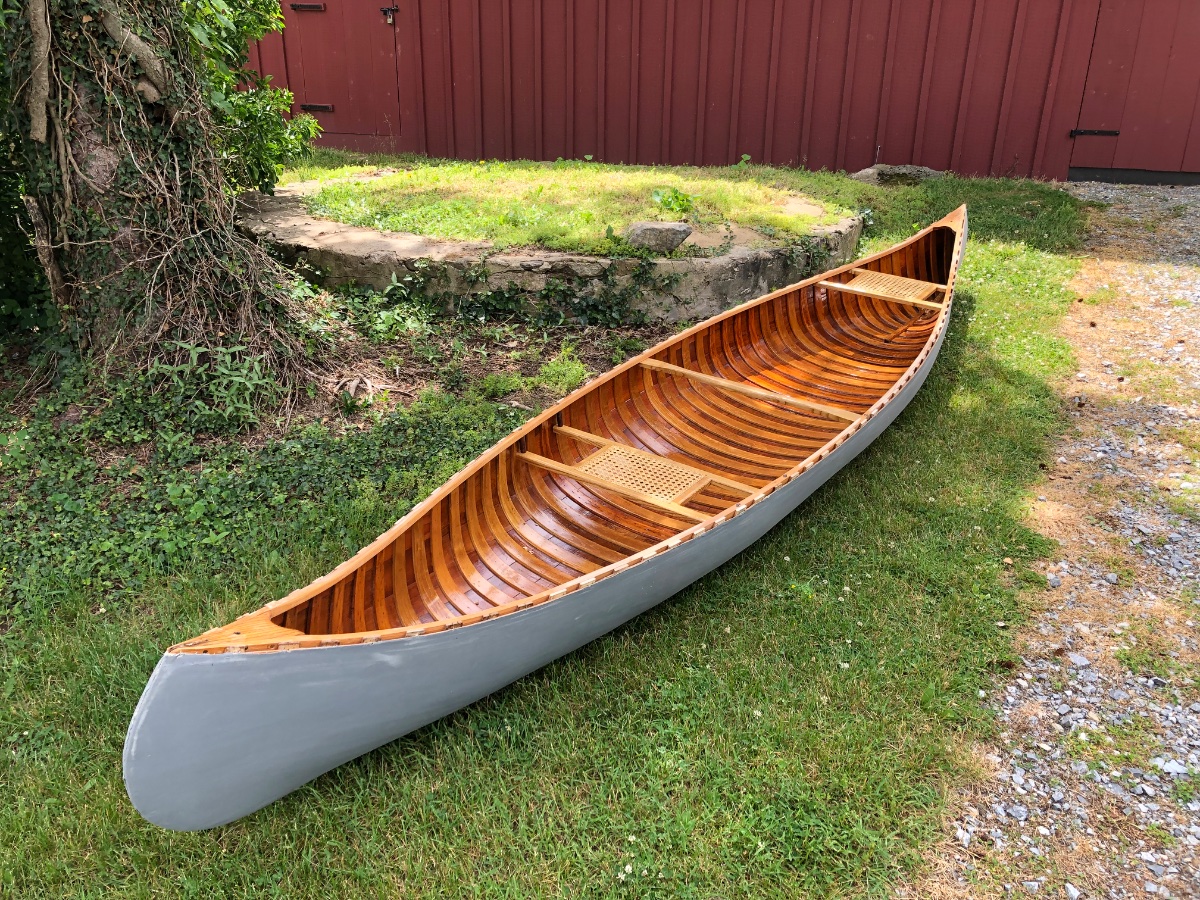
IMG_3685.jpeg


IMG_3721.jpeg

I have read several times that some install the outwales prior to the final coat of paint, lapping paint over the joint between paint and outwale- the logic being to seal the top of the canvas from water intrusion. I have never done this. Does anyone have an opinion about it? Was it ever standard practice from Old Town or any other manufacturer?

Very soon I'll be drilling and shaping the stem bands and finishing up the details. Delivery to her owner is going to be quite soon.
 
Hi Patrick - I've always thought the "logic" behind this (painting the underside of outwales in order to keep water intrusion minimal) is nonsense, but I still do it. Particularly in an open gunwale canoe and even in closed, water will find its way in there. In the open gunwales, the canvas is right there, exposed at every slot between rib pairs! So why do I do it? Because it seems easier. I've done it both ways - bottom of inwale painted or varnished, and it seems easier when taping off to make the junction between paint and varnish at the lower outside edge of the gunwale.

I fully varnish inwales with several coats before installing and then completing paint and varnish. This ensures that the inwale is fully protected by finish (there can be no gap between paint and varnish at their meeting line), and completing painting after initial varnishing ensures that any paint nicks and scratches from installing outwales is corrected.
 
Last edited:
Thanks Michael, I guess that a painted intersection of outwale and hull will avoid the water which runs off the canoe if turned over soaking wet, or mounted on a vehicle rack wet, but it will certainly not do anything for the water which intrudes between ribs when a canoe is emptied of rain water, wave splash, or wet-entry dripping feet!

For paint maintenance over time, taping off the underside of the outwale to paint the hull will result in a seal there- presuming that expansion and contraction of the hull/outwale joint doesn't break the seal- but I wonder if simply removing the outwale each time one repaints isn't easier than careful taping. It will certainly speed painting I would think.

As long as the outwale is fully protected by varnish inside and out, and maybe the outside of the rib tips is varnished as well, I would think that's good enough. I would consider the canvas as a disposable element in the mix.

Before I install the outwales I might look carefully at varnishing the top edge of the canvas. I've never tried it. Maybe it would add longevity to the canvas edge.
 
Varnishing the edge of the canvas might help, but is it really worth it? And where to draw the line with all the possible improvements. I doubt the original factory builders did these things and yet history shows that a canvas can last many decades with proper care. Sone cedar-canvas canoes that are a hundred or more years old - and used - still have good, original canvas on them. There's nothing wrong with going the extra steps, but are we really gaining much if anything? Where lies the point of diminishing returns? This is the crux of the question.
 
There's nothing wrong with going the extra steps, but are we really gaining much if anything? Where lies the point of diminishing returns? This is the crux of the question.
Yes, you’ve hit the nail (tack?) on the head! The canvas is disposable and these canoes have survived for many decades without the attention to detail which we restorers lavish on them. It is fun to pursue the minutiae though…
 
Back
Top