Glue choice for an outwale scarf joint

patrick corry

solo canoeist
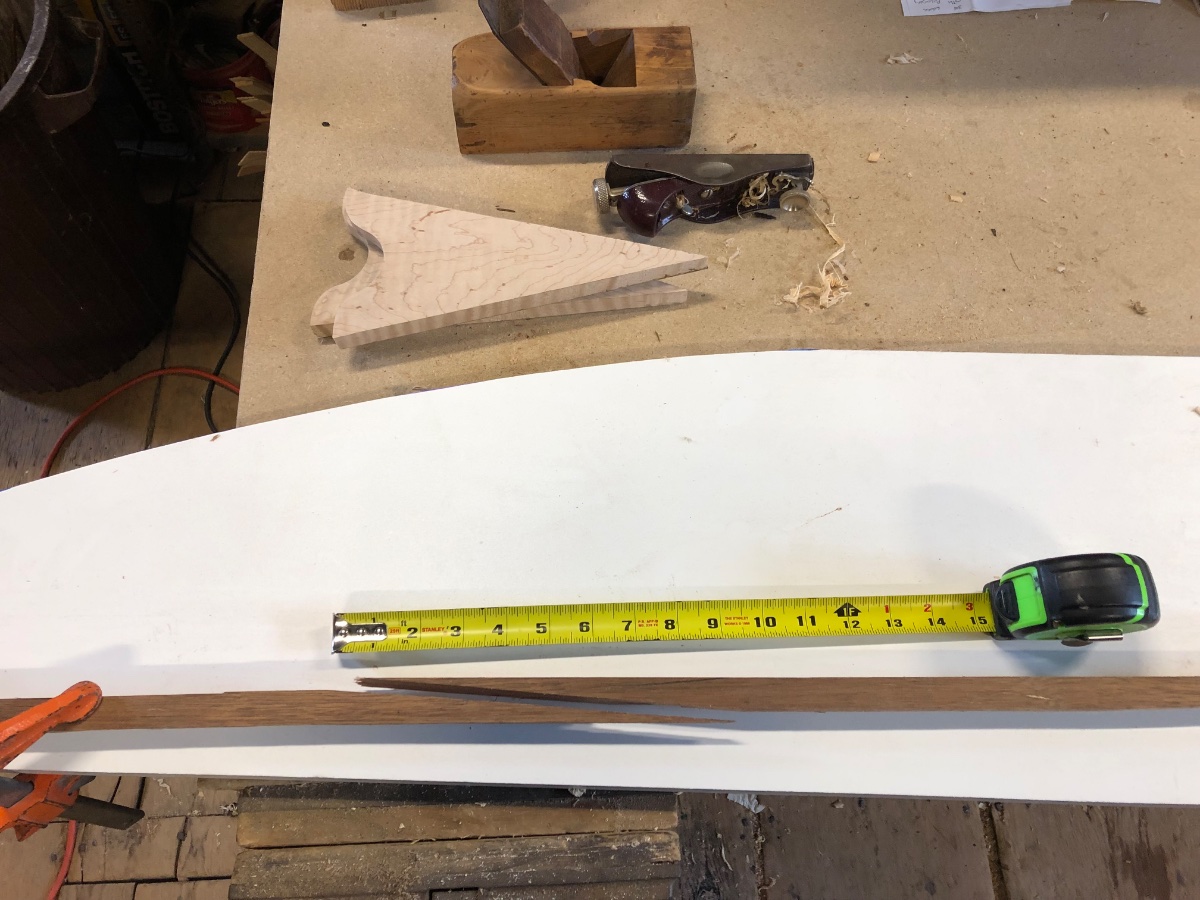
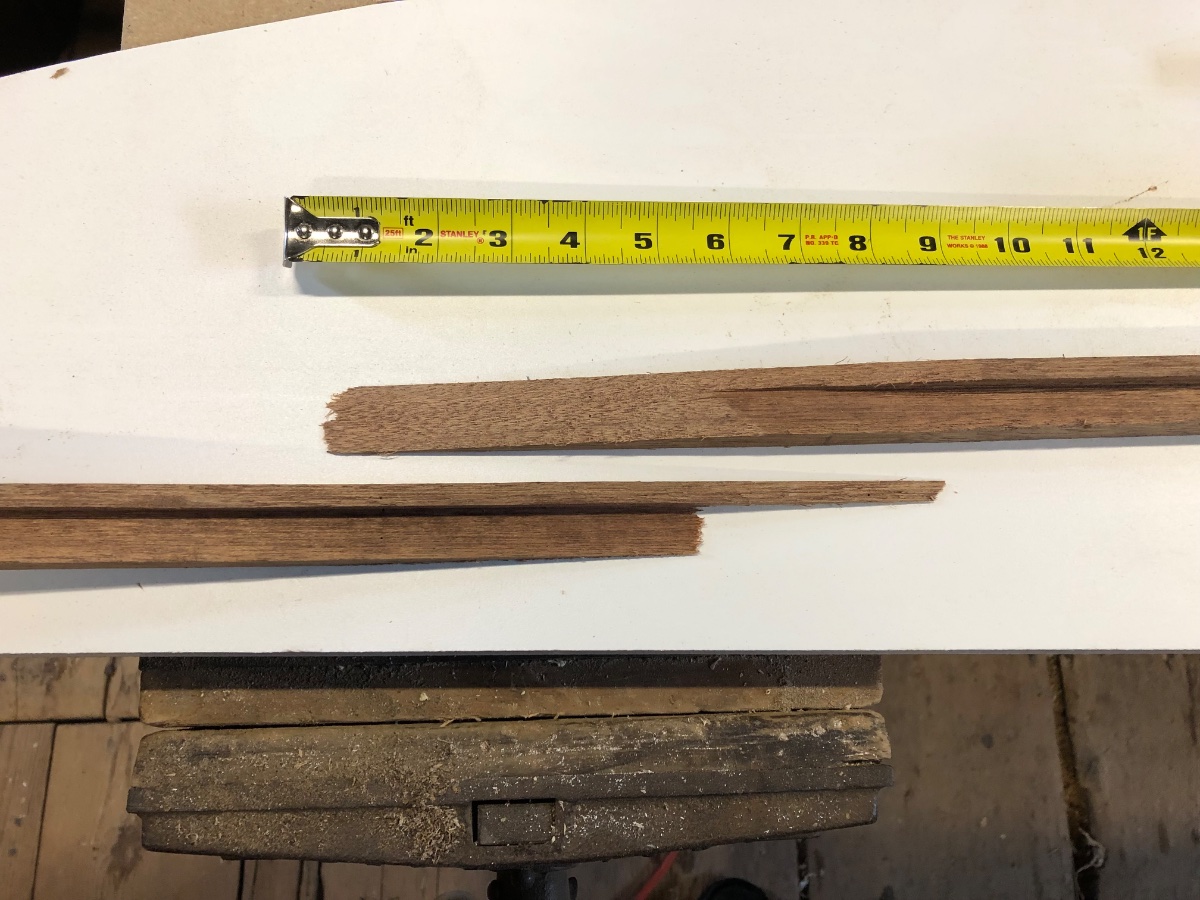
I have a mahogany outwale (actually probably Sapele) which catastrophically failed at the sweep up toward the stem during test fitting. It was a jagged, nearly vertical break. Since then I have scarfed the two pieces at roughly a 10-1 angle and intend to glue and retry. The outwale will be positioned so that the joint is as far away as possible from the greatest sweep (roughly 3' from the stem), but will still likely require steaming. Here's the question; which glue will tolerate steaming the best? Titebond III or G Flex epoxy?

viewed from the side against the hull:
IMG_3614.jpeg

viewed from above:
IMG_3611.jpeg
 
Last edited:
Patrick, don't have an answer for you but interested in seeing a picture of your conundrum.
 
I did a little more research.... it seems that neither accept heat well. It may be possible to steam and bend on the piece at the stem-end, then later glue the scarf end once the bent piece is installed. That will likely be the plan.
 
Pat,
I think Rollin Thurlow did a trial some time ago trying to see at what temp an epoxified scarf would fail. I could swear it was reported in the forum with the joint done with epoxy and it help held up to well over 275F. At the time I too was seriously considering trying again with a mahogany side cap, but chickened out. The stress on these thin side caps with the compound bends and twist at the ends with some high sweeps we see stretched my courage a bit too far.
So he who fights and runs away lives to fight another day. I think if I had too try again with the thin cap, I would prefer to move away from the worst part of the curve. Good luck.
Dave
 
Dave, I guess it's worth a try... there's already a few hours of work in milling and shaping both of the outwales. If a few minutes of clamping and gluing rescue the damaged one it's time well spent. The nice thing is that the scarf once complete should be virtually invisible since the grain is only offset by the length of the scarf, and appears as original.
 
Personally, I'd use WEST 105/205 regular formula instead of G-Flex. There is nothing about that joint that needs to flex and regular lower viscosity epoxy is likely to soak into the wood better.
 
I agree with Todd, of course. I use the same, and often use a hair dryer to heat up the wood as it really disposes the wood to absorb the regular
West epoxy. A light Classic mahogany stain will render the scarf line essentially invisible, but I know of the reluctance to stain here, just sayin'.
 
I would make the splice longer, at least 12" to14" long. It makes a difference. I've steamed spliced joints with West System epoxy and it has worked.
Use a long filler strip in the rails rabbit to square off the stock, using the same type of wood can be helpful. Just tape the filler strip in place before steaming. It can be clamped in place when it comes out of the box , just before bending the rail. Better yet is shaping a fake rail that has the opposite rabbit cut so the real rail and the fake rail fit tight together with a rabbited joint. Steam and bend them clamped together. It will give the spliced joint a lot more support and the two rails clamped together will be wider and which makes it easier to bend. The fake opposite rail only needs to be four or five feet long.
 
Back
Top