patrick corry
solo canoeist
Okay, a philosophy discussion ensues...
Please entertain me with your opinions on re-planking this 1927 Old Town 50#er. I'm planning on completing a restoration in time for a centennial splash at Assembly next year, hopefully at Paul Smiths College because the canoe was delivered to Lake Clear Junction (Saranac Lake area, NY). It was delivered to Mrs. F.B.Trudeau, wife of Dr. Francis B. Trudeau of early tuberculosis research fame. Apparently the doctor's research on Rabbit Island, within Spitfire Lake which is adjacent to Lower St. Regis Lake & the college campus (formerly the site of Paul Smith's hotel), was instrumental in understanding recovery from tuberculosis.
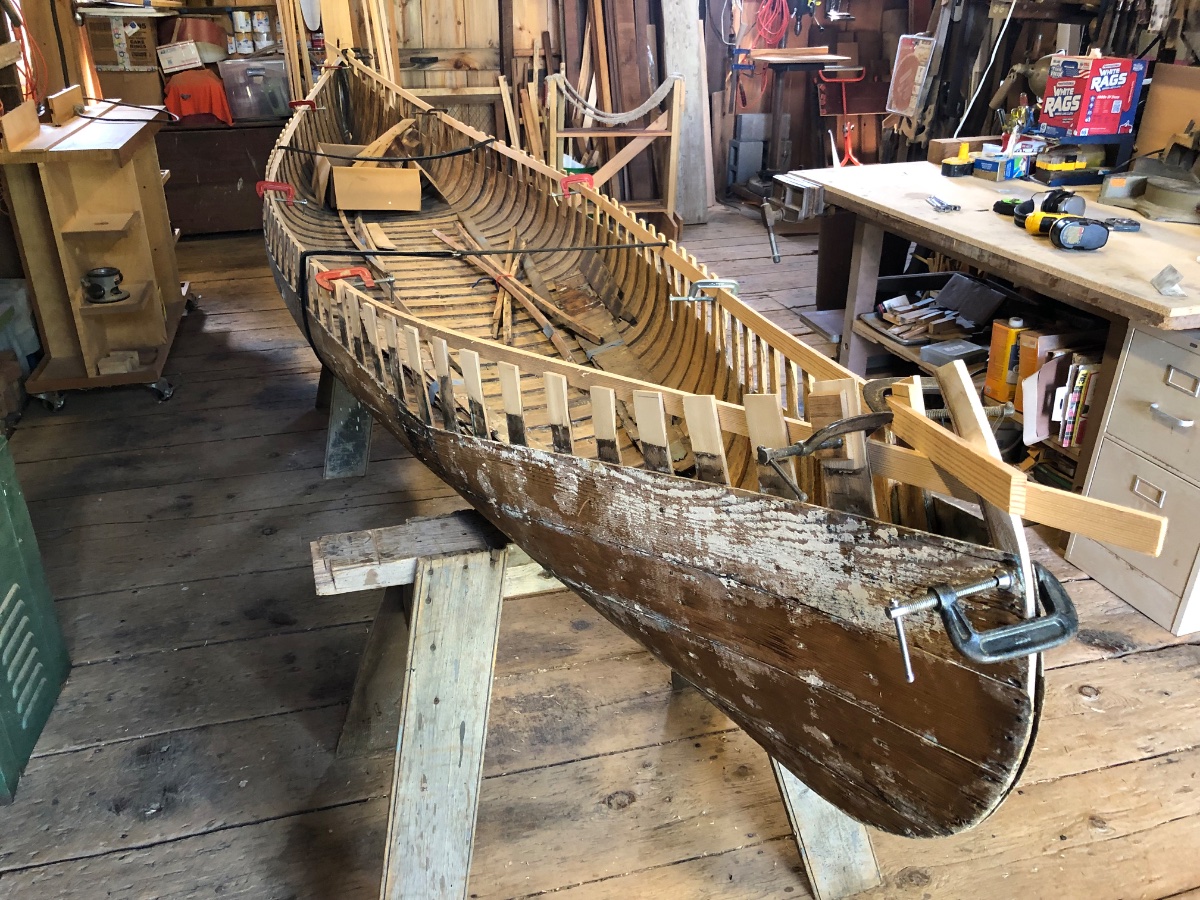
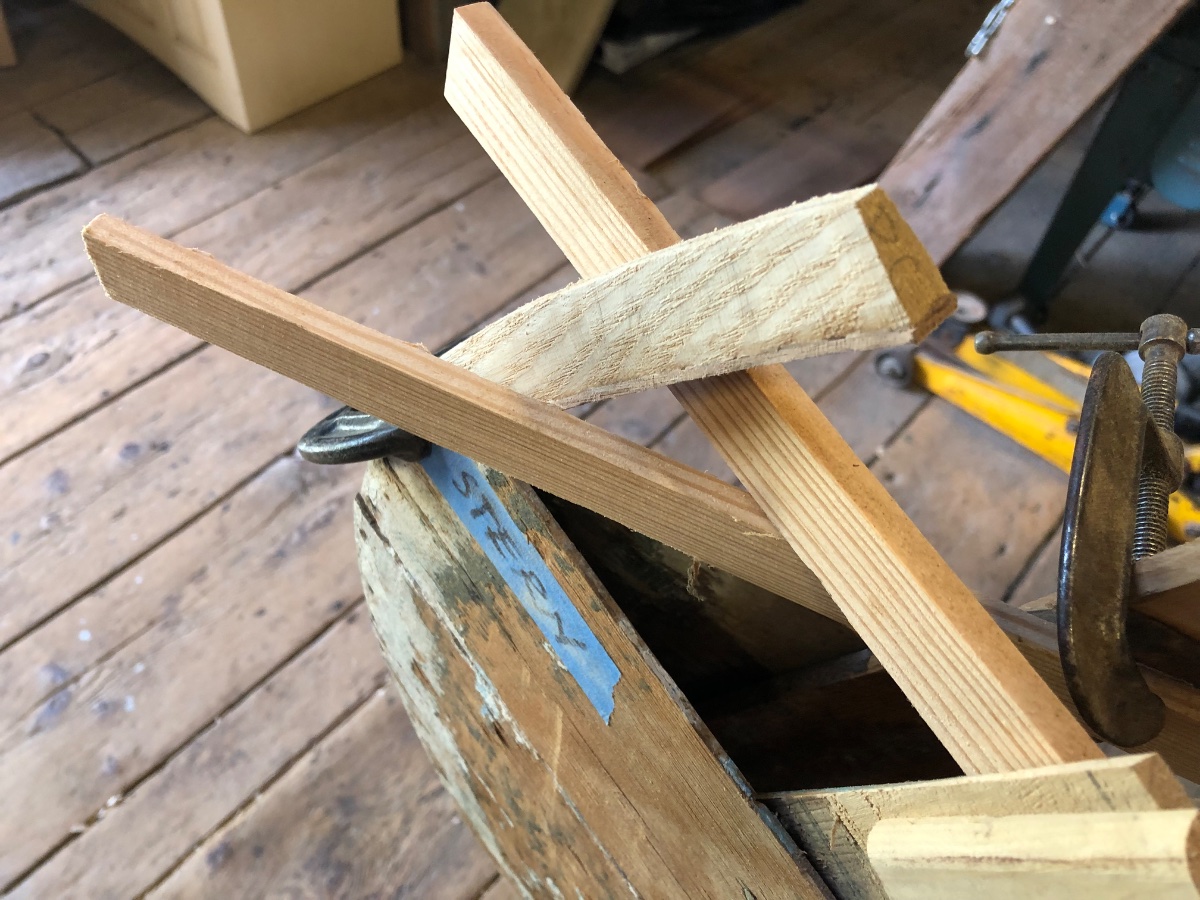
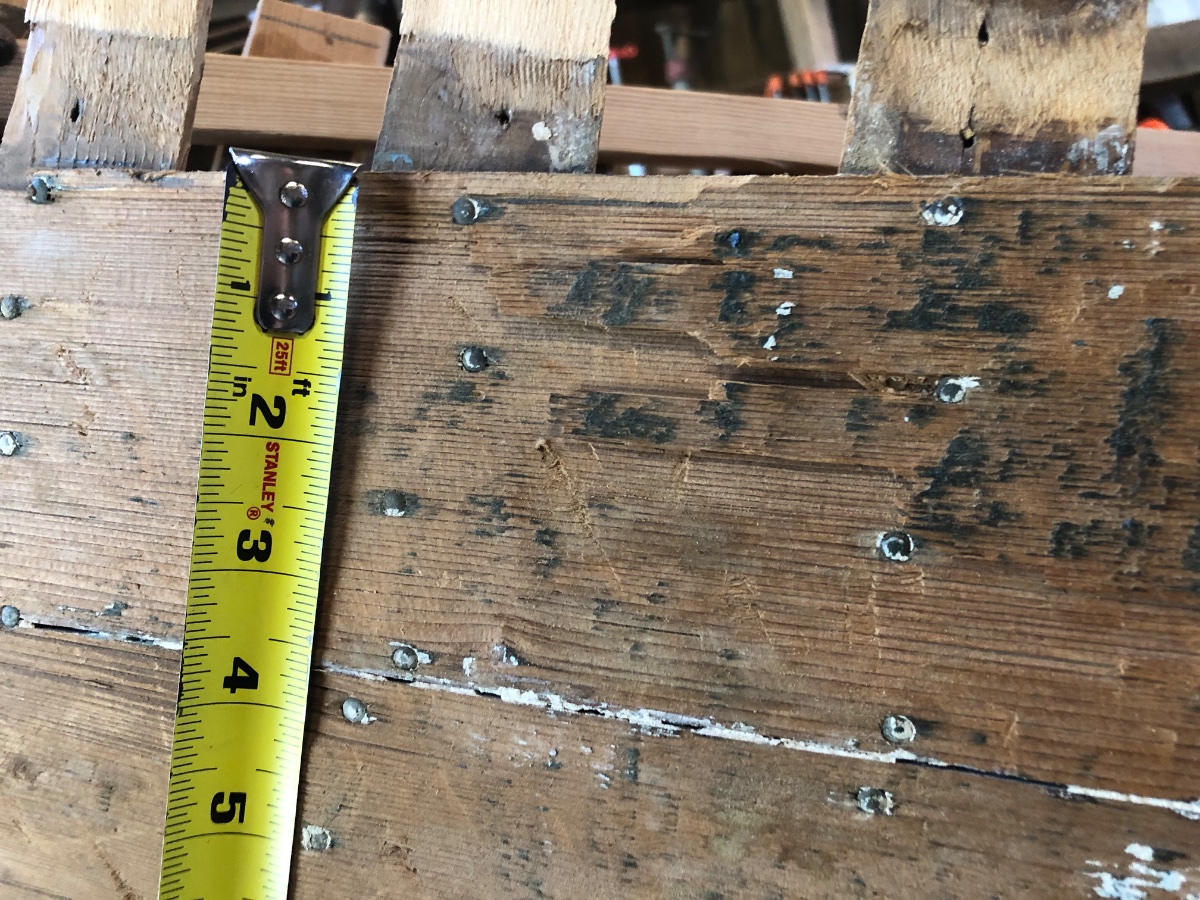
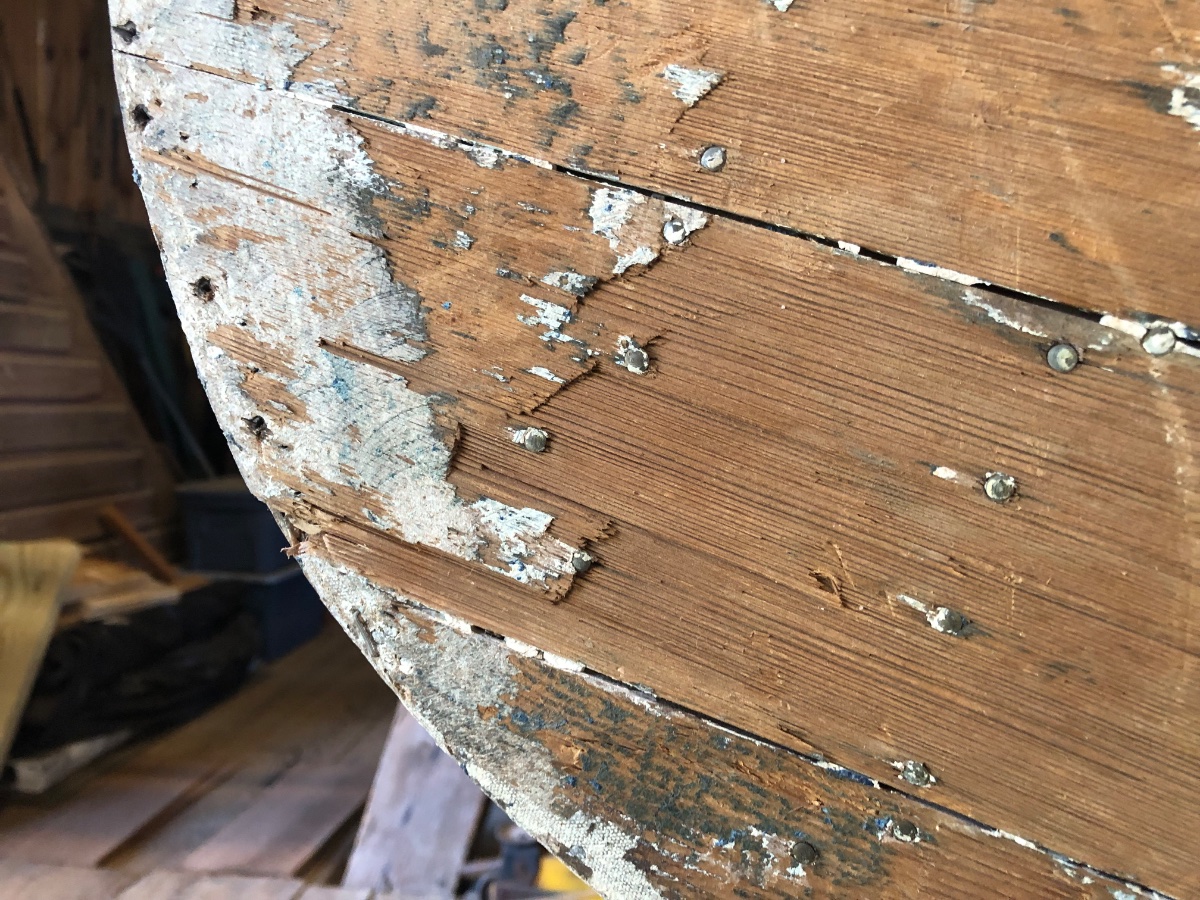
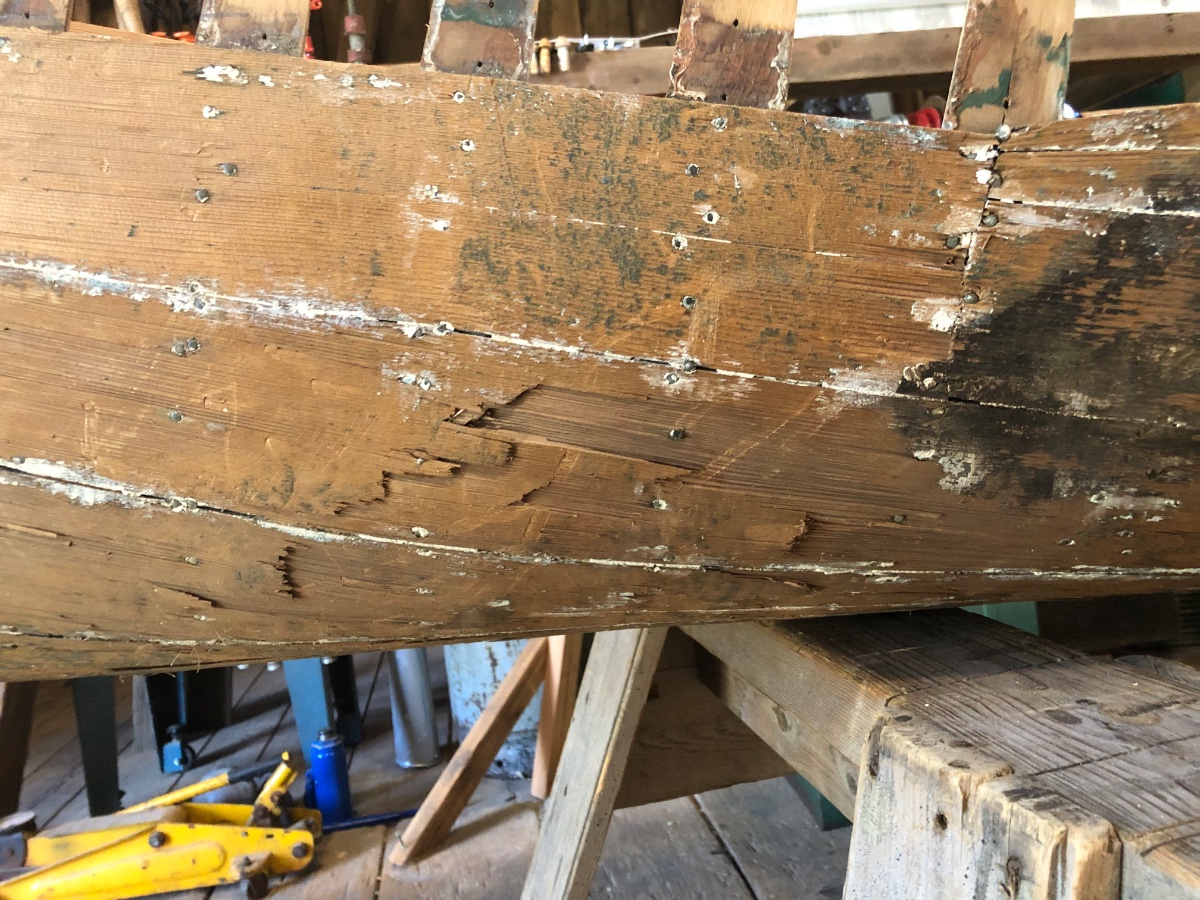
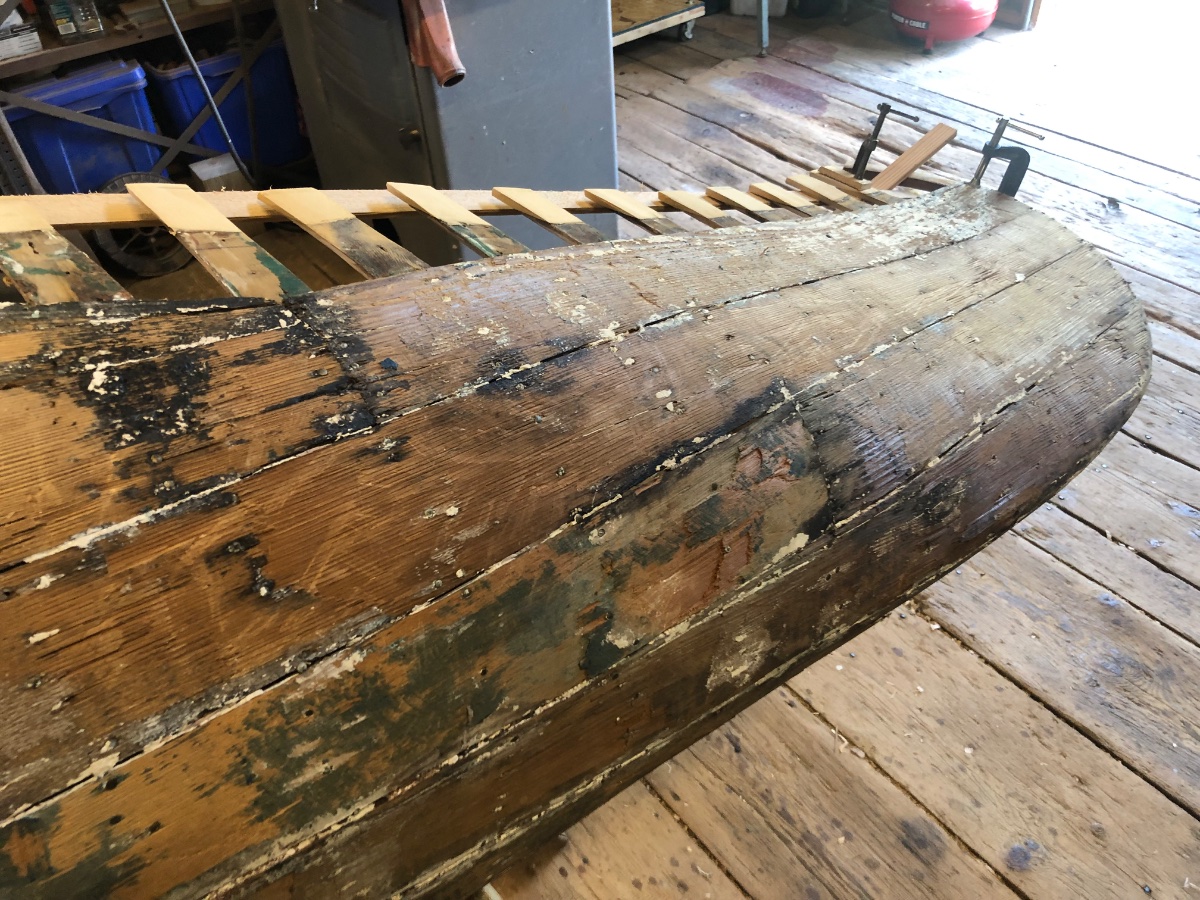
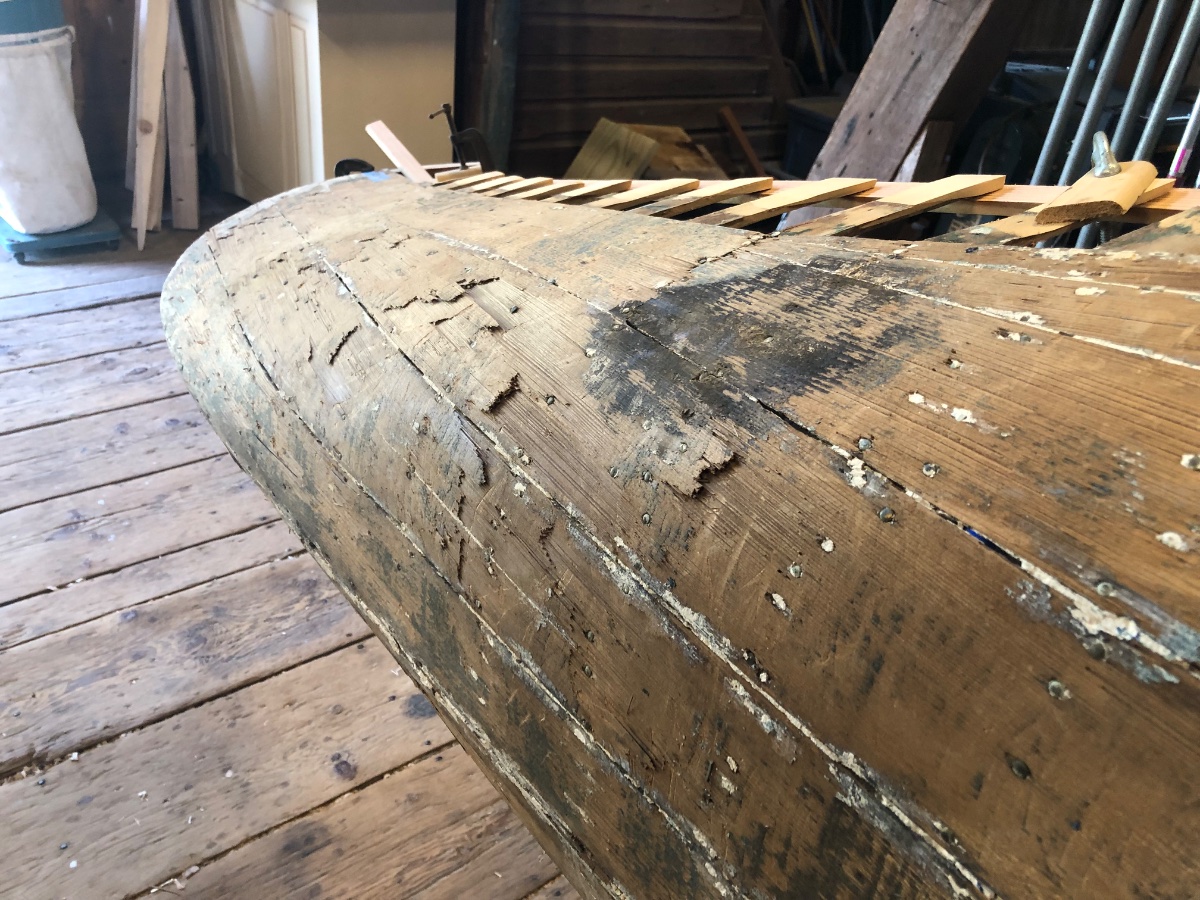
The canoe was apparently painted inside, mostly removed by a previous owner. I have repaired all the rib tips and stem tops. No decks, thwarts, seats, are present. The dilemma for me is the planking. It has significant damage, I think caused by removal of a prior 'skin' which may have been fiberglass. There is lots of residual filler, putty, etc. on the exterior which fills the gaps between planks.
I have been thinking of completely re-planking the canoe but I worry about the appropriateness of juxtaposing new planking with the old ribs. One advantage in re-planking is that it would enable me to remove all the white gunk from the canoe along with any paint and dirt which has migrated between ribs and existing planking.
I guess the answer lies with the intended purpose of the restored canoe. Will it be a daily user? An exhibit in someone's cabin? One thought is to donate it to the Trudeau Institute in Saranac Lake; it's a center for disease research, founded by the Trudeau family. Will it be owned once complete by descendants of the original owner? Who knows, but it may have some bearing on how it gets done. I would love to hear some opinions about any of it... the aesthetics, the history, the practical details of re-planking (I know it's going to be difficult to clinch all those tacks without a form under it!).
Maybe I should re-install the upper planking I saved, make some inwales and re-install the broken outwale bits, then someone could display it as is- no canvas or interior finish... but I'd rather it become a user!
Fire away with your thoughts.
Please entertain me with your opinions on re-planking this 1927 Old Town 50#er. I'm planning on completing a restoration in time for a centennial splash at Assembly next year, hopefully at Paul Smiths College because the canoe was delivered to Lake Clear Junction (Saranac Lake area, NY). It was delivered to Mrs. F.B.Trudeau, wife of Dr. Francis B. Trudeau of early tuberculosis research fame. Apparently the doctor's research on Rabbit Island, within Spitfire Lake which is adjacent to Lower St. Regis Lake & the college campus (formerly the site of Paul Smith's hotel), was instrumental in understanding recovery from tuberculosis.
The canoe was apparently painted inside, mostly removed by a previous owner. I have repaired all the rib tips and stem tops. No decks, thwarts, seats, are present. The dilemma for me is the planking. It has significant damage, I think caused by removal of a prior 'skin' which may have been fiberglass. There is lots of residual filler, putty, etc. on the exterior which fills the gaps between planks.
I have been thinking of completely re-planking the canoe but I worry about the appropriateness of juxtaposing new planking with the old ribs. One advantage in re-planking is that it would enable me to remove all the white gunk from the canoe along with any paint and dirt which has migrated between ribs and existing planking.
I guess the answer lies with the intended purpose of the restored canoe. Will it be a daily user? An exhibit in someone's cabin? One thought is to donate it to the Trudeau Institute in Saranac Lake; it's a center for disease research, founded by the Trudeau family. Will it be owned once complete by descendants of the original owner? Who knows, but it may have some bearing on how it gets done. I would love to hear some opinions about any of it... the aesthetics, the history, the practical details of re-planking (I know it's going to be difficult to clinch all those tacks without a form under it!).
Maybe I should re-install the upper planking I saved, make some inwales and re-install the broken outwale bits, then someone could display it as is- no canvas or interior finish... but I'd rather it become a user!
Fire away with your thoughts.