Hello everyone,
I’m the owner of a Peterborough Muskrat that I believe was built at the Chestnut factory in Fredericton in the early 1950s.
I have a few planks that need to be replaced, and I purchased Mike Elliott’s book to help with the restoration. However, I still have a couple of questions I’m hoping someone here can help me with.
1. What type of cedar was originally used for the planking?
I’m trying to determine whether my canoe was originally built with red cedar or white cedar. From what I understand, it should be white cedar since it was built on the East Coast of Canada, but I’d really like to confirm this before ordering the replacement planks.
2. What should I do about the difference in color between the cedar plank?
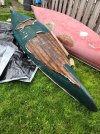
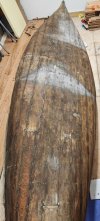
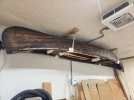
The canoe was stored outside for several years. Some areas were covered by the canvas while others were exposed to the elements, so the exposed cedar has become noticeably darker/tarnished.
Should I use a product or treatment to restore the cedar closer to its original color, or would it be better to leave the old wood as it is? Since the canoe will eventually be covered with canvas again, I’m wondering if the difference in color between the exposed and previously covered wood is something I should be concerned about.
Thank you in advance for your help.
Julien
I’m the owner of a Peterborough Muskrat that I believe was built at the Chestnut factory in Fredericton in the early 1950s.
I have a few planks that need to be replaced, and I purchased Mike Elliott’s book to help with the restoration. However, I still have a couple of questions I’m hoping someone here can help me with.
1. What type of cedar was originally used for the planking?
I’m trying to determine whether my canoe was originally built with red cedar or white cedar. From what I understand, it should be white cedar since it was built on the East Coast of Canada, but I’d really like to confirm this before ordering the replacement planks.
2. What should I do about the difference in color between the cedar plank?
The canoe was stored outside for several years. Some areas were covered by the canvas while others were exposed to the elements, so the exposed cedar has become noticeably darker/tarnished.
Should I use a product or treatment to restore the cedar closer to its original color, or would it be better to leave the old wood as it is? Since the canoe will eventually be covered with canvas again, I’m wondering if the difference in color between the exposed and previously covered wood is something I should be concerned about.
Thank you in advance for your help.
Julien